How to Get Twitter Username You Really Want
Key Takeaways
- Twitter usernames are distributed on a first-come, first-served basis. If your desired twitter username is already claimed, you cannot simply request it from twitter support.
- Before doing anything else, check availability using Twitter’s own signup flow at twitter.com/signup or through your current account settings.
- If the handle is taken, your realistic options include polite outreach to the current owner, monitoring inactive usernames, or filing an impersonation claim or trademark complaint where justified.
- Twitter does not allow buying or selling usernames. Any attempts to trade handles can result in permanent suspension for both parties.
- Once you secure the twitter handle you want, protect the account immediately with a strong password, two-factor authentication, and current recovery information.
Introduction: How Twitter Usernames Work in 2026
A twitter username, also called a handle, is the unique identifier that appears after the @ symbol in your profile. It shows up in your profile url (for example, https://twitter.com/YourName) and is how other users find, mention, and tag you. Usernames must begin with the @ character and can only be between 4 and 15 characters long, using letters, numbers, and underscores.
Usernames are distributed on a “first-come, first-served” basis. Once someone claims a handle, it’s unavailable to everyone else unless the account is deactivated, suspended, or the username is voluntarily released. There are limited exceptions for abuse, impersonation, or trademark issues, but those require formal processes.
As of 2026, Twitter still enforces a strict policy: the platform does not allow buying or selling of usernames, and soliciting payment for one in a post or comment also violates the rules. Accounts caught in username transactions risk permanent suspension.
This article walks you through everything you need to know: how to check if a handle is available, what to do when it’s taken, how to deal with inactive accounts, when legal options apply, and how to lock down your account once you’ve secured the username you want.

How to Check If a Twitter Username Is Available
The first step is confirming whether your desired twitter username is actually free. Here’s how to do it.
Using the Signup Page
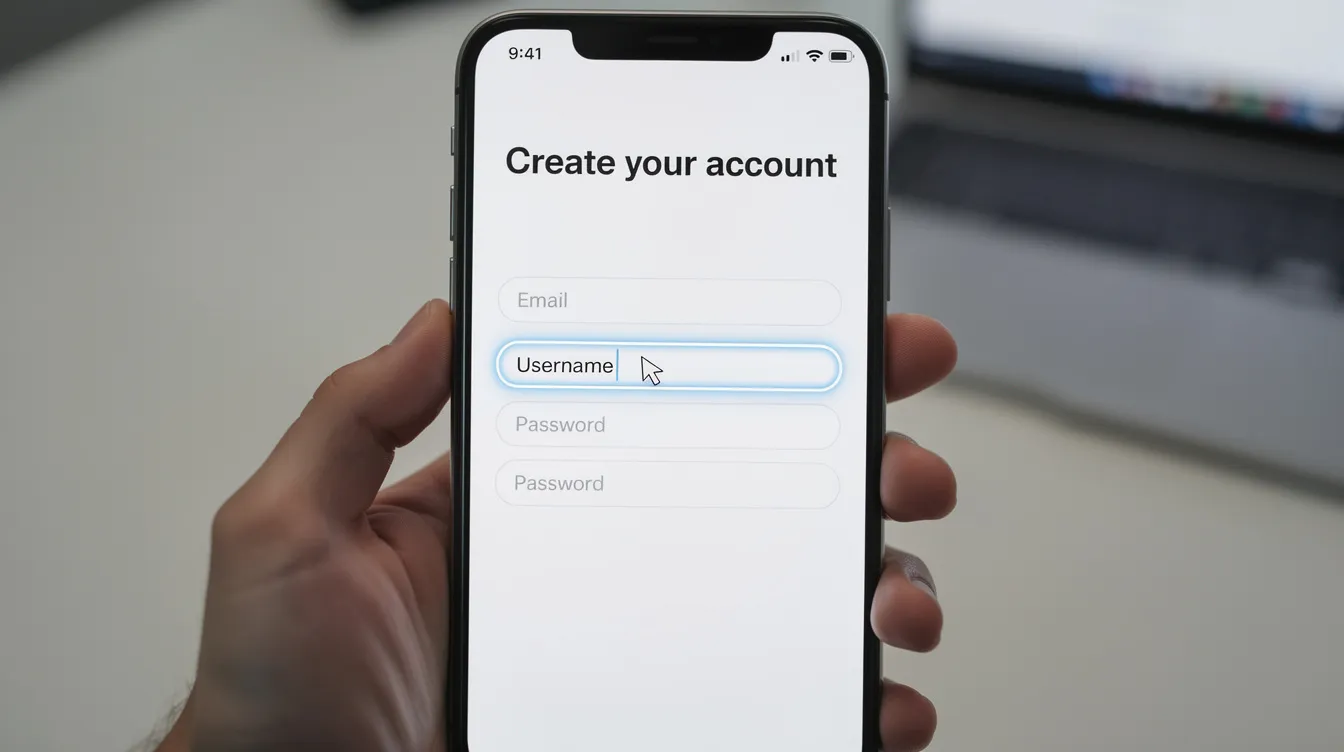
You can check username availability at twitter.com/signup. During the registration flow, Twitter lets you test different handles in real time. The platform indicates username availability during updates, showing you instantly whether a handle is open or taken.
From Your Existing Account
If you already have a twitter account, navigate to:
Settings and privacy → Your account → Account information → Change username
Type your desired handle into the field. You can only change your username if the desired one is available. If it’s free, Twitter will confirm it. If not, you’ll see an error message.
Common Error Messages
When a twitter handle is unavailable or invalid, you’ll typically see one of these:
Error | Meaning |
|---|---|
“Username already taken” | Another account has claimed the handle |
“Username is invalid” | Contains illegal characters or reserved words |
“Username too short/long” | Doesn’t meet the 4–15 character requirement |
Usernames must be 4–15 characters long. They can only contain letters, numbers, and underscores. Usernames cannot contain spaces or special symbols. Reserved words like “Twitter” or “Admin” are blocked unless used by official accounts. |
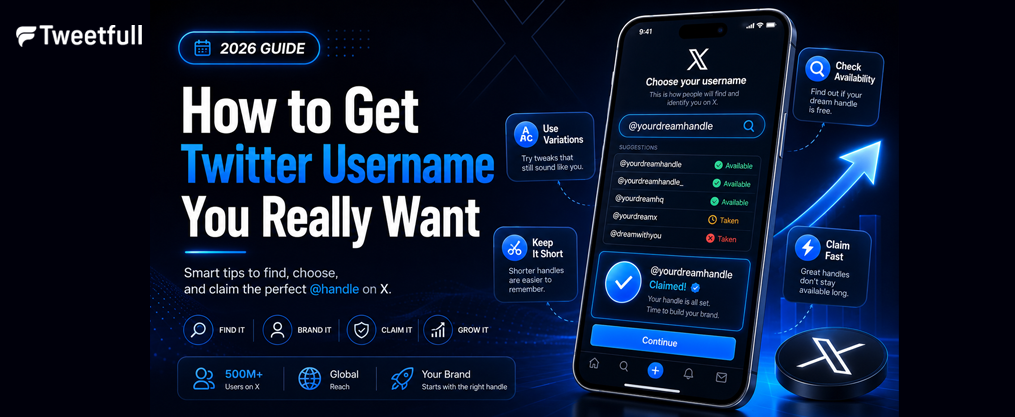
Try Variations
If your top choice is taken, test several alternatives:
- Add underscores: @your_name or @_yourname
- Append short suffixes: @yourbrandHQ, @yourbrandapp, @yourbrandio
- Include a location: @yournamenyc or @yourbranduk
- Add your birth year: @yourname92
These small tweaks can help you land a memorable handle that’s close to what you originally wanted, and you can also experiment with an AI-powered Twitter username generator to brainstorm compliant options.
Choosing a Strong, Realistic Twitter Handle
Be Realistic About Scarcity
In 2026, single-word usernames, common first names, and short handles (two or three characters) are almost always taken. Many of these are held by legacy accounts that were created over a decade ago. If your full name or business name is a common term, expect to need a variation.
Formats That Work
Here are some approaches that tend to produce available, memorable handles; for more structured guidance, you can follow best practices on how to select the best Twitter username:
- Brand + descriptor: @brandofficial, @brandteam, @brandco
- Name + profession: @janedoewriter, @johndoedev
- Abbreviation + suffix: @jdsmithHQ, @abcdesigns
- Adding a middle initial or using a suffix can help create a new username that stands out while remaining readable.
Display Name vs. Username
Your display name is the name that appears in bold on your profile. It can include emojis, spaces, and non-unique text. Your username is your unique login identifier, the one that follows the @ symbol. Both matter for branding, but the username is what people type to mention you and what appears in your profile url, so pairing the right handle with a compelling Twitter bio is essential for strong first impressions.
Cross-Platform Consistency
Use the same username across all social media platforms whenever possible. This makes it easier for followers to find you everywhere. Matching your profile details can also help Google surface your current account instead of older or less active profiles. Tools like Namecheckr help you verify handle availability across multiple sites at once. You can also use services like Namevine to check username status on various platforms simultaneously.
Keep in mind that each platform has different rules. Instagram allows periods, TikTok has different length limits, and Twitter’s constraints (4–15 characters, alphanumeric plus underscore only) are among the tightest.
Secure a Matching Domain
For maximum brand consistency, secure a matching .COM domain as your primary site for your chosen handle. If the .COM is taken, .CO is the second most popular TLD after .COM and makes a solid alternative. Using a matching domain name can also strengthen your claim for a username if you ever need to file a trademark complaint.
What to Do If Your Desired Twitter Username Is Taken
If your preferred handle is claimed, your next move depends on who holds it and how they’re using it, but you can still focus on growing more Twitter followers organically under a strong alternative handle.
Assess the Existing Account
Visit https://twitter.com/username to view the profile. Look for these signals:
- Recent tweets or likes: Does the account post regularly?
- Follower/following counts: Are they growing or stagnant? Monitoring Twitter follower growth and analysis over time can help you gauge how established the account really is.
- Profile completeness: Is there a bio, profile image, or header?
- Last activity date: When was the last tweet or interaction?
An active account with regular engagement means Twitter will almost never reassign the username unless there’s a clear impersonation or trademark policy violation.
Don’t Offer to Buy It
This is critical. Twitter does not allow buying or selling usernames. If either party is caught in a handle transaction, both accounts can be permanently suspended. Avoid any form of payment, gift, or “donation” tied to a username transfer. No matter how tempting it is, working outside the rules puts your own account at risk.
If the account is clearly active and legitimate, your best options are either choosing a variation or waiting and monitoring.
Politely Asking the Current Owner
Sometimes the simplest approach works. If the user who holds your desired twitter username seems approachable, a respectful message costs nothing.
Craft a Brief, Honest Message
Send a polite direct message or reply to one of their posts. Include:
- Who you are (your real name, your business, or your project)
- Why the handle matters to you
- A clear note that you respect their right to say no
- No mention of payment or incentives
A simple example: “Hi, I’m launching a project called [name] and your handle would be a perfect fit. If you ever consider changing yours, I’d be grateful. No pressure at all.”
Important Caveats
If you represent a large company or well-known brand, be especially careful. Anything that appears coercive, or that hints at payment, can trigger both policy violations and PR problems.
Also note that even if the user agrees and changes their handle voluntarily, there is no guaranteed transfer. Twitter does not officially broker transfers between private users. The moment they release the username, it becomes free and any user on the platform could grab it. To move a username between accounts, you must log into the original account first, change the handle, and then quickly claim it from the second account. Timing and luck matter here. All you can do is move fast and hope the timing works in your favor.
Dealing With Inactive Usernames
One of the most common frustrations is finding that your preferred twitter handle belongs to an account that hasn’t posted in years. Here’s what you need to know about inactive accounts.
Twitter’s Current Inactivity Policy
Twitter requires accounts to log in every six months. Accounts that remain inactive for over six months may be deleted under the platform’s inactive account policy. Additionally, Twitter requires accounts to tweet at least once every six months to remain considered active. These requirements mean dormant accounts are technically at risk of removal, and periodically cleaning up your Twitter followers profile can help you spot inactive or low-quality connections on your own account.
However, there’s a significant gap between policy and practice. Less than 25% of Twitter’s employees remain after October 2022, which has affected the platform’s ability to enforce policies consistently. In practice, many accounts that appear abandoned continue to exist because someone occasionally logs in without posting.
How to Spot an Inactive Account
Look for these signals, keeping in mind that none are definitive:
- No tweets for years
- Zero or near-zero followers and following
- Default or missing profile image
- No bio or a generic placeholder bio
These are clues, but Twitter determines inactivity based on login behavior, not public-facing activity. An account with no visible tweets may still be technically active.
Will Twitter Release the Username?
Here’s the honest answer: Twitter may release inactive usernames in bulk without a specific timeframe. There is no public schedule, guarantee, or priority list for individual requests. Twitter support generally does not manually assign specific inactive usernames to individual users, and if you ask about a specific inactive handle, you may get no response or only a generic response, even if the account appears abandoned.
The inactive account policy exists, but the release of specific handles remains unpredictable. Patience is your main tool here.
What You Can Do
Set periodic reminders to check the username. Visit the profile page to see if the account still exists, has been suspended, or has been deleted. If the profile returns an “account doesn’t exist” message, the username may now be free.

Impersonation and Trademark Options
When someone is actively using your brand identity or pretending to be you, Twitter offers formal channels to address it.
What Counts as Impersonation
Impersonation on Twitter means an account is intentionally misleading other users by posing as a specific person or brand. Simply sharing a name does not qualify. There must be clear intent to deceive: using your photos, copying your bio, or mimicking your content in a way that causes confusion.
Filing an Impersonation Claim
You can report impersonation to Twitter using their designated form. When submitting an impersonation claim, include:
- Your account information (or proof of your identity if you don’t have an account)
- The URL of the account you’re reporting
- A detailed description of how the account is impersonating you, and clearly explain why it is misleading users and what specific elements support your claim
- Screenshots or links showing the misleading behavior
Twitter’s team will review the claim and may suspend or force a rename on the offending account.
When a Trademark Complaint Applies
If you own a registered trademark and someone is using it as their twitter handle in a way that causes brand confusion, a trademark complaint is appropriate. You’ll need to submit:
- Trademark registration number and jurisdiction
- Proof of brand ownership
- Evidence of consumer confusion
Trademark violations can lead to username transfers, though the process is not automatic. Twitter may suspend or rename the violating account, but you still need to register the freed username quickly. Twitter does not guarantee the handle will be reserved for you.
Important Limitation
Even after a successful claim, Twitter support may not automatically grant the exact twitter username to the complainant. Be prepared to act fast once the handle is released.
Understanding Twitter’s Rules on Username Squatting and Trading
Twitter’s username squatting policy specifically prohibits several behaviors.
What Qualifies as Squatting
- Creating multiple accounts solely to hold desirable or popular usernames
- Registering handles that match trending terms, brand names, or celebrity names with no intention of using them
- Holding inactive usernames to sell or trade later
Twitter may release usernames held by account squatters when violations are reported and confirmed.
Buying and Selling Is Banned
This cannot be overstated: Twitter does not allow buying or selling usernames. Both the buyer and seller risk permanent suspension. This includes:
- Direct cash transactions
- Trades or swaps between accounts
- Paid “donations” disguised as gifts
- Using third-party brokers or handle marketplaces
Third-party “handle brokers” or marketplaces that promise specific usernames violate Twitter’s terms and frequently turn out to be scams. Users who engage with these services risk losing both their username and their account, so if you explore automation tools such as a Twitter likes generator for engagement, make sure they comply with Twitter’s rules and don’t involve handle trading.
Work Within Official Channels
Instead of attempting to circumvent the rules, use the legitimate processes available:
- File an impersonation report if the account is pretending to be you
- Submit a trademark claim if your registered mark is being misused
- Report abuse if the account violates other platform policies
These paths are slower but carry no risk to your own account.
Monitoring and Preparing for Username Availability
If your desired twitter username isn’t available right now, preparation is everything, especially if you plan to connect your profile to automation tools and need to understand getting started with TweetFull or similar services.
Set Regular Reminders
Add calendar reminders to check the handle every two to four weeks. Availability can change without notice. Twitter may release inactive usernames in bulk, but no specific timeframe is given, so consistent monitoring is your best approach, particularly if you’ll later need a developer setup and know the steps to create a Twitter developer account for advanced tools.
Keep a Shortlist of Backup Handles
Don’t let your brand launch stall because of one unavailable username. Maintain a list of three to five alternative handles that you’d be satisfied with. This way, you can move forward while still waiting for your top choice.
Manual Monitoring Tactics
Visit the target profile periodically and look for status changes:
- “This account doesn’t exist” → The account was deleted or deactivated. The username may be free.
- “Account suspended” → The username is not available until Twitter takes final action.
- Active profile → Still claimed. Check back later.
When an account owner deactivates their own account, there’s a 30-day window before permanent deletion. After that period, the username becomes available for registration by others.
A Note on External Tools
Some external alert tools claim to notify you when a username becomes available. These can be unreliable and may send false positives. Always verify availability through Twitter’s own interface before attempting to claim a handle.
Securing Your Twitter Account Once You Get the Username
Landing the right handle is only half the battle. If you don’t protect the account, you risk losing it.
Strong, Unique Password
Use a password that’s long, random, and unique to your twitter account. Store it in a password manager like 1Password, Bitwarden, or Dashlane. Never reuse passwords from other services, and follow broader tips to keep your Twitter account secure to reduce the risk of losing a valuable handle.
Enable Two-Factor Authentication
Go to Settings and privacy → Security and account access → Security → Two-factor authentication and turn on 2FA. Use an authenticator app rather than SMS whenever possible, as SIM-swapping attacks remain a real threat to high-value handles.
Recovery Information
Add a recovery email and phone number, and keep them current. If you ever lose access or forget your password, these are your lifeline to regain access to the account. Without them, recovery becomes extremely difficult.
Ongoing Security Habits
- Enable login alerts so you’re notified of any unusual sign-in attempts
- Regularly review connected third-party apps and revoke access for any you don’t use
- Search periodically for accounts that may be impersonating your handle or display name
- Monitor for suspicious direct messages or phishing attempts
Treat your twitter handle like a domain name. The more valuable it is, the more you need to protect it.
FAQ
Can Twitter support give me a username I want if the account looks inactive?
Generally, no. Twitter support does not manually assign specific inactive usernames to individual users, even if the account appears completely abandoned. The platform may remove or recycle inactive usernames in bulk, but there is no public schedule, guarantee, or priority list for individual requests. Your best approach is to check availability periodically and be ready to claim the username quickly if it is ever released. If the inactive account is using your registered trademark, you can file a trademark complaint, but for non-trademark cases, there’s no formal request process.
Is it safe to pay someone privately to transfer a Twitter handle to me?
No. Paying for usernames violates Twitter’s rules and can result in permanent suspension of both parties’ accounts. Even if a seller changes their username voluntarily, the handle becomes briefly available to everyone on the platform. Another user could claim it before you do, and you’d have no recourse. Avoid any form of payment, gift, or “donation” that is tied to transferring a twitter username. It’s simply not worth the risk to your account.
What if my real name is already used by someone else on Twitter?
Twitter allows multiple users to share the same real name since usernames are the unique identifiers, not display names. Your display name can duplicate someone else’s without issue. To distinguish yourself, consider adding a middle initial, location abbreviation, or profession descriptor to your twitter handle. For example, @JohnSmithNYC or @JaneDoeWriter. An impersonation claim is only appropriate if the other account is pretending to be you with clear intent to deceive, not simply because someone else shares your name.
Can I change my Twitter username without losing my followers?
Yes. Changing your username does not affect your existing followers. Your tweets, followers, likes, and direct messages all stay intact. Only the handle and profile url change. It is advised to alert followers before changing your username so they recognize the new handle. Post a tweet announcing the switch, update links on your website, email signatures, and other social profiles. Also keep an eye on whether anyone registers your old username and starts impersonating you. If that happens, report it immediately.
How often can I change my Twitter username?
Twitter does not publish a strict limit on how many times you can change your username. You can change your username multiple times a day if needed. However, frequent changes confuse followers, hurt brand consistency, and make it harder for friends and clients to find you. Treat your new username as a long-term choice. Before confirming any change, verify that the handle meets Twitter’s length and character rules and that it aligns with your brand identity across all platforms.