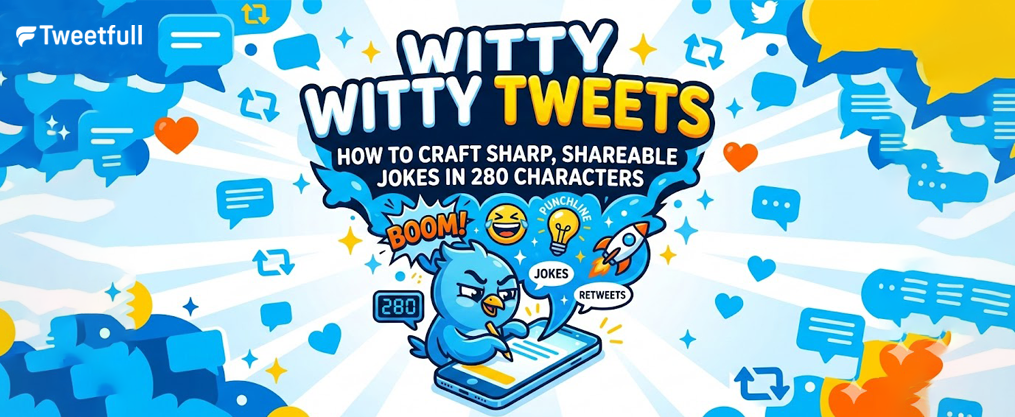
Witty Tweets: How to Craft Sharp, Shareable Jokes in 280 Characters
Introduction
The internet runs on humor, and nowhere is that more obvious than on Twitter (now X). But there’s a difference between a tweet that gets a polite chuckle and one that makes someone screenshot it, send it to three friends, and think about it randomly at 2 AM. That difference is wit. Crafting witty tweets is an art, requiring creativity, timing, and skill to truly stand out.
This guide is for anyone who wants to write funnier tweets, from casual users to aspiring comedians and social media managers. Witty tweets can help you stand out, connect with others, and bring more laughter to your online experience.
This article breaks down exactly what separates witty tweets from generic funny stuff, how to write your own, and how to build an audience around your sharp observations. Humor is a secret weapon on social media, enhancing engagement, making people feel more hopeful and optimistic, and helping you connect with your audience in a memorable way. Whether you’re looking to sharpen your comedic voice or simply want to understand why certain tweets feel smarter than others, you’re in the right place. Give yourself permission to laugh and embrace humor in your daily life. The best tweets often come from regular people, not just professional comedians.
The internet can be a dark place, but humor on platforms like Twitter can serve as a beacon of hope, bringing lightness and connection to people’s feeds. Witty tweets can also help reduce anxiety and stress, as laughter has proven therapeutic benefits for mental health.
Why Witty Tweets Matter
Humorous tweets can provide a light-hearted escape from daily life, offering moments of joy and laughter in the midst of busy routines. Witty insights and sarcastic social commentary are common in humorous tweets, making them not only entertaining but also thought-provoking. Humor in tweets can serve as a way to connect with others and foster engagement, helping people find common ground and build online communities. Relatable humor and clever observations often resonate with users’ everyday experiences, making witty tweets a powerful tool for spreading positivity and connection across social media.
- Witty tweets are compact jokes, observations, or roasts that feel smart, surprising, and instantly shareable—they reward the reader for “getting it.” Enjoy the process of finding and sharing witty tweets with others.
- The best witty tweets mix clever wordplay, timing, and relatability drawn from everyday life and current events.
- Screenshots, bookmarks, and threads are useful to save great tweets before they get deleted or buried in feeds.
- Using trends, meme formats, and recurring bits (like running jokes) can grow a loyal audience over months and years.
- You’ll learn concrete techniques, examples, and practical tips for writing your own witty tweets and curating favorites from others.
Introduction to Twitter Humor
Twitter humor has become a cornerstone of online entertainment, transforming the way people across the world start their morning, unwind after a long day, or simply scroll for a quick laugh. The most hilarious tweets don’t just make us chuckle—they connect us, spark conversations, and sometimes even go viral, spreading laughter to millions. Whether you’re looking for a witty observation about life, a clever roast, or a relatable take on daily struggles, Twitter is the place where humor thrives in 280 characters or less.
What makes Twitter humor so powerful is its accessibility. Anyone can join in, from amateur comedians to everyday people sharing their favorite tweets. The internet’s love for quick, sharp jokes means that a single tweet can brighten someone’s mood, reduce stress, and make the world feel a little lighter. In fact, studies show that laughter is a natural stress-buster, boosting your immune system and making even the hardest days a bit easier to handle. So, whether you’re seeking a dose of joy before school or work, or just want to see what’s making the world laugh this week, Twitter humor is an essential part of the daily internet routine—proving that sometimes, the best way to start your day is with a tweet and a smile.
What Makes a Tweet “Witty” Instead of Just “Funny”
A witty tweet is a concise, clever message that often includes witty insights, relatable quips, and sometimes sarcastic social commentary on daily life. Humorous tweets frequently blend these elements to create content that feels both smart and instantly relatable.
Witty tweets are jokes or observations that feel intelligent, layered, and re-readable. They’re not loud or shocking—they’re precise. The humor comes from somewhere unexpected, requiring the reader to connect the dots themselves. Witty tweets work because they trust the reader to pick up on subtle cues, building a sense of connection and mutual understanding. That moment of recognition is what makes wit satisfying in a way that obvious jokes simply aren’t.
Consider the difference between a generic funny tweet about Mondays (“Ugh, Mondays are the worst, am I right?”) and a witty one that uses irony or misdirection: “My boss sent me an email at 8:59 PM asking if I had ‘a quick sec.’ I did not. That sec cost me my entire evening.”
The first tweet states something obvious. The second paints a vivid scene, uses specific details, and twists expectations with the word “cost.” It trusts the reader to understand the frustration without spelling it out.
The core elements of wit include:
- Brevity: Every word earns its place
- Surprise: The ending goes somewhere unexpected
- Precision: Word choice matters enormously
- Implied meaning: Readers connect the dots themselves
Since Twitter’s launch in 2006, the site evolved into a digital comedy stage where these bite-size bits of wit flourish. The platform’s character limits—originally 140, now 280—force writers to trim the fat and punch harder. It’s constraint as creative fuel.
Here are a few examples illustrating different flavors of wit:
- “I have a fear of speed bumps, but I’m slowly getting over it.” (deadpan wordplay)
- “My therapist told me to write letters to the people I hate and then burn them. Did that, but now what do I do with the letters?” (absurd misdirection)
- “I’m not saying I’m out of shape, but I just got winded scrolling.” (self-deprecating observation)
Each works differently, but all share that moment of recognition where the reader thinks, “Oh, that’s clever.”

Types of Witty Tweets You See on X (Twitter)
Not all witty tweets look the same. They fall into recognizable styles, and understanding these categories helps you both appreciate what you read and experiment with your own voice.
One-Liner Observations
These tweets draw from daily life—commuting, office culture, online dating, the app that keeps crashing—and twist expectations in the final words. The setup sounds relatable, but the punch reframes everything.
“I love the gym. Not going, just having a membership. It brings me peace.”
The world is full of these moments. The trick is noticing them and then finding the unexpected angle.
Sarcastic and Ironic Tweets
These say the opposite of what they mean, often reacting to news, politics, or tech. When the algorithm changes for the tenth time in 2024, sarcastic tweets flood the timeline: “So excited that the thing I spent six months building now reaches twelve people.”
Irony works because it lets readers feel like they’re in on the joke. You’re not explaining your frustration—you’re assuming your audience shares it.
Surreal and “Weird Twitter” Style
Some of the funniest tweets make absolutely no sense on first read. Bizarre premises, non-sequiturs, and intentionally broken grammar create a mood rather than a punchline.
“a horse walked into a bar. I was the horse. I am still in the bar. this is my house now.”
This style isn’t for everyone, but it has a dedicated audience who love the chaos.
Character-Based Tweets
Some accounts develop a consistent persona—an overconfident expert, an exhausted parent, a chaotic roommate—and sustain it across months or years. Every tweet reads like a window into that character’s life. For example, a character account might post witty tweets about what it’s like to meet a celebrity or have an awkward encounter, turning these meetings into running jokes that followers look forward to. There’s always that guy who posts witty or amusing content, making followers feel like they know him personally.
This consistency helps building a following because people know what to expect. They come back for more of that specific voice.
Quote-Tweet Roasts
Sometimes the wittiest tweets aren’t standalone—they’re responses. A well-placed quote-tweet can add a punchline that reframes the original post entirely. This style requires timing and the ability to view someone else’s content through a comedic lens.
How to Write Your Own Witty Tweets
Staring at a blank tweet composer can feel impossible. Here’s how to move from nothing to something sharp.
Brainstorm Setups from Real Life: Pay attention to what you hear in conversations, meetings, or media—funny remarks, clever observations, or unexpected moments can all spark ideas for witty tweets.
Use Concrete, Specific Details
Vague complaints fall flat. Specific details bring things to life. Instead of “work is hard,” try “my boss scheduled a mandatory meeting about ‘synergy’ on Friday at 4:47 PM.”
The time, the buzzword, the day of the week—these specifics make it real and funny.
Brainstorm Setups from Real Life
Your best material is already happening around you:
- Group chats with friends
- Work Slack messages that made you sigh
- Awkward Zoom calls where someone’s kids burst in
- Weird headlines you found this week
- Comments from family during holidays
- The sounds your house makes at 3 AM
Write down the things that annoy, confuse, or delight you. That’s your raw material.
Master the Setup-Twist Structure
The classic structure works: the first half sets expectations, the second half breaks them.
Wordy version: “I tried to eat healthy today, but then I realized that I hadn’t eaten any vegetables in months, and honestly, cookies taste better anyway, so I gave up.”
Tight version: “Started my diet today. It ended today.”
The silence between setup and punch does the work. Less is more.
Cut Unnecessary Words
Every extra word dilutes the punch. Read your draft out loud. If something can go, it should go.
Before | After |
|---|---|
“I was thinking about how…” | Cut entirely—just say the thing |
“It’s really interesting that…” | Start with the interesting part |
“At the end of the day…” | Delete |
Use Rhythm and Line Breaks
How a tweet appears in the feed affects how it reads. Short second lines create natural pauses:
“I don’t agree with cancel culture.
Unless it’s plans. Cancel those.”
The line break controls timing like a comedian’s pause.
Develop Recurring Formats
Formats people recognize become signatures. “Me vs. my brain” dialogues. “Also me” setups. Fake diary entries. The format becomes a container for new observations.
“2019: ‘I should save more money.’ 2024: ‘Does this $8 coffee bring me joy? Yes. Approved.’”
Followers start to anticipate your style, which keeps them coming back.
Sample Tweets for Inspiration
- “I’ve reached the age where ‘staying in’ is the event I’m most excited about this week.”
- “My therapist told me to face my fears. So I started scrolling my inbox.”
- “Dating in your 30s is just two people seeing who can admit they’re tired first.”
These are fictional examples, but they demonstrate specificity, twist endings, and relatable premises.

Advanced Techniques: Using Multimedia
If you want your funny tweets to stand out in the endless scroll of Twitter, adding multimedia is a game-changer. A clever joke paired with the perfect GIF, meme, or short video can turn a simple tweet into a viral sensation, multiplying the laughter and making your content instantly more shareable. Multimedia helps you deliver punchlines visually, add context to your jokes, and tap into trending internet moments that everyone’s talking about.
Many of the funniest tweets on Twitter owe their success to a well-chosen image or a looping video that takes the joke to the next level. Whether you’re riffing on a popular meme, reacting to the latest news, or just adding a funny photo of your cat, multimedia makes your tweets more engaging and memorable. It’s also a great way to connect with people who might not catch every nuance in text alone—sometimes, a picture really is worth a thousand words (or at least a thousand retweets).
For creators and brands alike, using multimedia isn’t just about making people laugh—it’s about making your content pop in a crowded feed and can directly support getting more likes and retweets on your Twitter posts. So next time you’re crafting a tweet, consider how a GIF, video, or meme could amplify your humor and help your tweets reach a wider audience. The right visual can turn a good joke into everyone’s favorite tweet of the week.
Specialized Topics: Niche Humor
One of the best things about Twitter is how it brings together people with every imaginable interest—and that’s where niche humor shines. Funny tweets about kids’ antics, school mishaps, or the latest political drama have carved out their own corners of the internet, giving everyone a place to laugh about the things that matter most to them. By focusing on specialized topics, comedians and creators can connect with audiences who share their passions, making their content feel more personal and relevant.
Niche humor isn’t just about making people laugh—it’s about building community. Whether you’re tweeting about the daily struggles of parenting, poking fun at school life, or offering a satirical take on politics, you’re joining a conversation that’s important to your followers. These tweets often spark deeper discussions, raise awareness about real-world issues, and help people feel seen and understood.
If you want to make your mark on Twitter, don’t be afraid to dive deep into the topics you care about. The internet is full of people looking for content that speaks to their experiences, and your unique perspective could be exactly what makes someone’s day. Studying engaging tweet examples that boost audience interaction can also help you see how other creators use niche angles. From the most hilarious tweets about milk in the staff fridge to sharp commentary on world events, niche humor proves that there’s a funny side to everything—if you know where to look.
Collaboration and Feedback: Working with Others
Behind every great tweet is a community of people sharing ideas, offering feedback, and inspiring each other to be funnier and more creative. On Twitter, collaboration is key—whether you’re co-writing tweets with a friend, joining in on a trending hashtag, or participating in a comedy challenge, working with others can take your content to the next level.
Feedback is just as important as collaboration. By listening to your followers, reading comments, and paying attention to what makes people laugh, you can refine your style and make your tweets even sharper. Sometimes, the best ideas come from a quick exchange in the replies or a suggestion from someone halfway across the world. Embracing feedback helps you grow as a creator and ensures your content stays fresh and relevant, and it’s a core part of proven strategies for getting traction on Twitter.
So don’t be afraid to reach out, tag a friend, or ask for input on your next post. The world of Twitter humor thrives on connection, and by working together, you can create tweets that not only make people laugh but also bring the community closer. After all, the funniest tweets are often the result of a little teamwork and a lot of shared laughter.
Finding, Curating, and Saving Brilliant Witty Tweets
Great tweets can disappear without warning. Accounts get suspended, posts get deleted, and the algorithm buries gems from six months ago. If you want to hold onto the good stuff, you need a system for filling folders like ‘Best Tweets 2023’ or ‘Comedy Gold’ with your saved witty tweets over time. Pair that with a guide to finding and growing a targeted Twitter audience so the witty content you save and create actually reaches the right people. To make navigation even easier, use tags to categorize tweets or articles by topic, humor style, or relevance.
For example, when using Twitter search filters, you can look for witty tweets from a specific week in March to find trending or timely content.
Scroll down for the next article or check out related articles to keep discovering more ways to curate and enjoy witty tweets.
Use Twitter Search Filters
The app’s search is more powerful than most people realize. Search specific phrases that tend to appear in witty tweets:
- “I cannot stress enough”
- “This is not a drill”
- “Possibly the greatest”
- “I hope this email finds you”
Combine with date filters to find tweets from specific times—like the chaos of election week or award show season.
Organize with Lists and Bookmarks
Create Lists for accounts that consistently deliver, and combine this with habits that get more followers on Twitter with tried and tested steps. Organize bookmarks into themes:
- Workplace humor
- Parenting laughs
- Tech and internet culture
- Politics (if you can handle it)
This makes it easy to revisit favorites when you need a mood boost or inspiration.
Screenshot and Store
Many people take screenshots of standout tweets and save them in organized photo albums. Create folders like “Best Tweets 2023” or “Comedy Gold” and fill them over time. When messages come asking for funny tweet recommendations, you’ll have a ready-made list.
Create Curated Threads
Curating weekly or monthly “favorite witty tweets” threads can become its own content series. Followers start to anticipate these roundups, and the experience of putting them together sharpens your own sense of what works, especially if you lean on proven tweet formats that transform your ideas into posts and broader Twitter growth strategies that prioritize consistency and engagement
Respect Creators
When you share tweets elsewhere—on other platforms, in newsletters, in blog posts—credit the original handle. Don’t scrape private accounts or repost without attribution. The witty tweet community thrives on mutual respect and proper crediting.
Using Witty Tweets to Grow an Audience
Wit isn’t just entertainment—it can be a deliberate strategy for building a following that sticks around and helps you grow your Twitter followers in quick time using proven hacks to skyrocket your Twitter followers in 2025.
Want more tips on crafting witty tweets and growing your audience? Sign up for our newsletter to get the latest updates and strategies delivered straight to your inbox.
Consistency Beats Viral Chasing
Posting clever, on-brand jokes consistently helps writers, comedians, marketers, and creators stand out in crowded timelines. You don’t need one massive viral hit. You need to be reliably good over time so people recognize your voice when it appears, which is easier when you map jokes into a simple Twitter content calendar for consistent posting
Time Your Posts Strategically
Posting around live events—award shows, sports finals, big tech launches—lets you ride real-time conversations. When everyone’s watching the same thing, a sharp observation can spread fast because the audience is primed and paying attention, especially if you experiment with the best time to tweet for higher engagement.
Use Trends Sparingly
Hashtags and trending topics can boost visibility, but don’t cram them in just for reach. Focus on having a sharp angle that adds something new. A witty take on a trend beats a generic reference every time.
Add Value in Replies and Quote-Tweets
Interacting with others’ tweets via replies and quote-tweets that add wit—not just “lol”—builds relationships and visibility. You’re not just consuming; you’re contributing to the conversation, which is one of several proven methods to generate more retweets.
Learn from Brand Accounts
Brands like Arby’s have used witty tweets during major events to feel human and relatable. Their pun-heavy style and clever bios show that even corporate accounts can develop a recognizable voice. Study what works for them and adapt the principles (not the jokes) to your own style.
Track What Works
Pay attention to which tweets perform best—likes, replies, bookmarks, reposts. Track these alongside key Twitter metrics like engagement rate and ROI and look for patterns that help you gain targeted Twitter followers for business growth:
- What topics resonate?
- What times of day get engagement?
- Which formats consistently land?
Adjust your style based on real data, not assumptions.
Engaging with Influencers: Reaching Out
If you want to amplify your Twitter humor and reach new audiences, engaging with influencers is one of the smartest moves you can make. Influencers have the power to boost your tweets, introduce you to new followers, and even collaborate on content that brings even more laughter to the Twitter community. Some creators also experiment with follow-for-follow Twitter strategies to boost followers, though these work best when paired with genuine relationships. By commenting on their tweets, sharing their content, or sending a thoughtful DM, you can start building relationships that open doors to new opportunities.
Learning from influencers is also a great way to stay ahead of trends and discover what makes content go viral. Many influencers are happy to share tips, offer feedback, or even team up for a funny thread or meme challenge. Combining this with organic Twitter growth tools and services can help you grow your audience, improve your comedy skills, and make your tweets more impactful.
Remember, the power of Twitter lies in its community. By reaching out to influencers and engaging with their content, you’re not just promoting your own tweets—you’re contributing to a larger world of laughter and creativity. Pair that human connection with a Twitter marketing tool designed for real growth and you can turn that engagement into steady audience expansion. So don’t hesitate to make the first move; you never know when a simple comment or retweet could lead to your next big break (or your new favorite collaborator). In the end, it’s all about making connections, sharing laughter, and using the power of Twitter to spread joy, one tweet at a time.
Ethics, Limits, and When a Witty Tweet Goes Too Far
Chasing laughs can tempt people to cross lines. This matters because your tweets live forever, and your reputation is hard to rebuild.
Punch Up, Not Down
There’s a meaningful difference between mocking powerful systems or public figures and targeting vulnerable groups. Wit that punches up feels subversive and clever. Wit that punches down feels mean and cheap.
Avoid Cheap Shots
Jokes based on race, gender, sexuality, disability, or appearance might get quick engagement, but they damage your credibility and hurt real people. The momentary laughs aren’t worth it.
Remember Tweets Are Permanent
Tweets from 2012-2015 have resurfaced in 2023 job searches and news stories. What seemed edgy a decade ago might read as wrong today. Write with the awareness that your words could follow you.
Pause Before Posting About Tragedy
When breaking news involves loss of life, public health crises, or disasters, pause before joking. Being the first to make a joke about a tragedy rarely ages well. Give yourself time to think about whether humor is appropriate or opportunistic.
Be Willing to Delete and Learn
If followers point out that something you wrote caused harm, listen. Delete tweets you regret. Apologize when appropriate. Growing as a person is more important than defending every joke.

FAQ
How often should I post witty tweets to see growth?
Aim for consistency over volume—1-3 strong tweets per day beats spamming dozens of weaker jokes. Quality and recognizability of voice matter more than raw output over the course of a few months. Readers remember accounts that deliver reliably, not ones that flood their feed with filler.
Do witty tweets still work with longer character limits?
Yes, but the most shareable wit remains concise. Twitter expanded from 140 to 280 characters, but that doesn’t mean you need to use them all. Use extra space only when it clearly improves the joke—like mini-stories, callbacks, or structured lists. Most great tweets could still fit in the original limit.
Can I turn my witty tweets into other content?
Absolutely. Standout tweets can become newsletter openers, Instagram captions, TikTok scripts, or even stand-up bits. Collect your best-performing tweets from a specific year into blog posts or email roundups. One good observation can live in multiple places if you adapt the format.
What if my witty tweets never go viral?
Most accounts grow slowly, and that’s okay. Modest engagement can still build a tight-knit, valuable audience over time. Focus on learning, refining your voice, and connecting with a small community. A thousand engaged followers who love your work beats a hundred thousand who scroll past.
Is it okay to reuse or rewrite other people’s witty tweets?
Directly copying others’ jokes without credit is frowned upon and damages your credibility fast. The internet has a long memory for joke theft. Use other people’s work as inspiration to understand structure and rhythm, but always write new, clearly original lines. Your goal is to find your own voice, not to echo someone else’s.