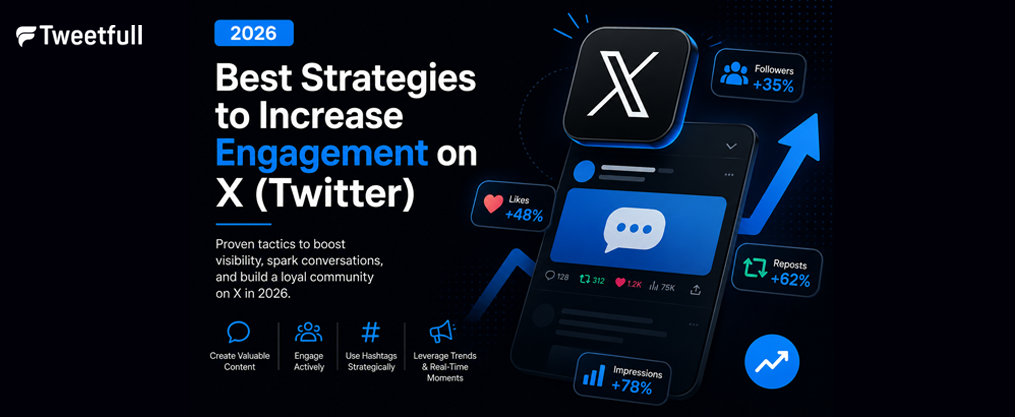
Best Strategies to Increase Engagement on X (Twitter) 2026
- Focus on restoring user trust with stronger safety tools, clearer policies, and more transparent moderation reports.
- Improve the core product experience: better feeds, smarter search, and higher-quality recommendations that de-prioritize spam and low-effort content.
- Rebalance the business model so both paying subscribers and non-paying users get a stable, fast, and broadly accessible platform.
- Make X more attractive for creators and brands with clearer analytics, fairer revenue programs, and genuinely useful verification.
- Invest in long-term health: developer APIs, accessibility, and safeguards around political content and misinformation ahead of major elections in 2026–2028.
Introduction: Why X (Formerly Twitter) Needs to Improve Now
This article explores the best strategies to increase engagement on X (Twitter) in 2026, focusing on restoring user trust, improving product experience, and optimizing for creators and brands. This guide is for social media managers, creators, brands, and everyday users looking to maximize their engagement on X in 2026. With competition from platforms like TikTok and LinkedIn, mastering engagement on X is crucial for visibility and growth.
Twitter, rebranded to X in July 2023, has undergone one of the most dramatic transformations in social media history. Under new ownership, the platform shifted direction rapidly—sometimes daily—leaving users, brands, and developers scrambling to keep up. The question on everyone’s mind isn’t whether X will survive, but whether it can thrive in an increasingly competitive landscape dominated by social media platforms like TikTok, Threads, and LinkedIn.
The concrete context makes this urgency clear. Between late 2024 and 2026, users witnessed verification shake-ups that stripped legacy blue checkmarks, API restrictions that killed beloved third-party clients, and timeline algorithm tweaks that made the For You feed unpredictable. Rate-limiting surprises in July 2025 left users unable to scroll their own feeds. For most businesses and creators who depend on the platform for real-time engagement, this instability created genuine uncertainty about investing further in their X presence. Using X for business can be difficult or overwhelming at first, but it can be beneficial for brand awareness and customer engagement.
This article outlines practical, product-level and policy-level improvements that could make X more useful, safer, and more sustainable for everyday users, creators, and organizations. The sections ahead cover trust and safety, product experience, monetization, brand tools, the developer ecosystem, and long-term platform health. To achieve meaningful progress, it is essential to have a clear aim or set of strategic objectives when considering how X can improve. These aren’t wishful thinking—they’re grounded in what research, user feedback, and successful social media strategy patterns tell us actually works.

Best Practices for Social Media
To stand out on Twitter and other social media platforms, it’s important to follow best practices that drive engagement and grow your follower base. Start by creating high-quality, relevant Twitter content that speaks directly to your target audience. Use relevant hashtags to increase the discoverability of your tweets and join trending conversations while looking for relevant conversations that align with your niche and your followers’ interests.
Tagging other users and engaging with their content can help you build relationships and expand your reach. Consistency is key—post consistently, but avoid overwhelming your audience with too many updates. Inconsistent posting can slow audience momentum and cost you potential followers. Responding to comments and direct messages shows that you value your followers and helps foster engagement. This kind of authentic engagement helps turn casual users into engaged followers, and it also supports higher visibility by steadily increasing your Twitter impressions with data-driven tactics.
Don’t overlook the power of Twitter ads and their different types to promote your content and reach new segments of your target market. Experiment with built-in features like Twitter Polls and related engagement tools to encourage participation with posts that invite responses and content that sparks conversation. By staying up-to-date with the latest trends and features, and by implementing a comprehensive social media strategy, you’ll drive more engagement, attract more followers, and strengthen your brand’s presence across all social media platforms. Experimenting with high-performing Twitter threads that deepen engagement can work well, but try a viral thread only when it delivers real value, not just reach.
Most Effective, Fact-Based Strategies to Increase Engagement on X in 2026
Here are the most actionable, research-backed strategies for maximizing engagement on X (Twitter) in 2026:
- Replies carry 15x more algorithmic weight than likes. This means that encouraging replies on your posts will significantly boost your reach and visibility. (Fact: 22)
- Posting 3-5 times daily is optimal for engagement. Maintaining this frequency helps you stay visible and relevant in your followers’ feeds. (Fact: 7)
- Threads consisting of 3-5 posts increase dwell time and improve reach. Threads outperform single tweets for engagement, especially when they are concise and focused, and they can be one of the most effective strategies to get more views on Twitter. (Fact: 48)
- Tweets with images generate 10x more engagement than text-only posts. Visual content receives much higher engagement, so include images whenever possible. (Fact: 18)
- Polls are a low-friction way for followers to engage. Polls prompt quick participation and are favored by the algorithm for sparking interaction. (Fact: 15)
- Engaging with comments can lift engagement by 8%. Responding to replies and comments on your posts not only builds community but also increases your post’s visibility. (Fact: 21)
Key Definitions for Engagement Strategies
- Engagement: Includes replies, likes, reposts, poll votes, and clicks. All these actions contribute to your content’s visibility and reach. (Fact: 37)
- Algorithmic Weight: The value the X algorithm assigns to different types of engagement. For example, replies carry 15x more algorithmic weight than likes, making them the most valuable form of interaction. (Fact: 22)
- Threads: A series of connected tweets, typically 3-5 posts, which increase dwell time and improve reach. Threads outperform single tweets for engagement. (Fact: 48)
- Visual Content: Tweets with images generate 10x more engagement than text-only posts. Visual content includes images, videos, and graphics. (Fact: 18)
- Polls: Polls are a low-friction way for followers to engage, prompting quick participation and boosting engagement rates. (Fact: 15)
By focusing on these strategies, understanding the underlying metrics, and refining how you create engaging Twitter post content, you can maximize your impact and grow your audience on X.
Strengthening Trust, Safety, and Content Quality
X’s reputation for real-time news and trending conversations is one of its core strengths. Participating actively in public conversation is crucial for fostering community and increasing visibility, allowing brands and users to engage, build reputation, and provide customer service. People also discover and join discussions through trending hashtags, which help surface timely topics to wider audiences. But that reputation gets undermined every time harassment goes unchecked, bots flood replies with crypto scams, or misinformation spreads faster than corrections. For the platform to remain relevant, trust must become a foundation rather than an afterthought.
Addressing Spam and Harassment
The 2025–2026 waves of reply-spam on high-profile Twitter accounts exposed gaps in anti-bot measures. Users scrolling through comments from public figures regularly encounter obvious spam promoting cryptocurrency schemes or adult content. More effective detection systems—combined with visible action against these accounts—would immediately improve the experience for both creators and their audience. Having a clear profile picture is also important for account credibility and safety, helping users distinguish genuine accounts from impersonators. Use a high-quality profile picture sized 400×400 pixels. (Fact: 25)
Improving Reporting Tools
Restoring and expanding robust reporting tools is essential. Users need:
- Report harassment: Move from basic categories to detailed subcategories with examples.
- Report status: Shift from often unclear to an in-app timeline with resolution updates.
- Appeal process: Replace opaque steps with documented steps and estimated timelines.
- Impersonation reports: Move from slow response to a priority queue with 24-hour initial review.
Transparency and Moderation
Transparent enforcement would rebuild confidence. Before 2022, Twitter published quarterly transparency reports with numbers on suspensions, appeals, and policy changes. Resuming these reports—with clear data on how rules are enforced—would signal that X takes moderation seriously without requiring users to simply trust that things are happening behind the scenes.
Visible labels and friction for likely misinformation during major events (elections, natural disasters) can slow the spread of false claims without fully suppressing legitimate debate.
Community Notes and Human Moderation
Community Notes has shown promise, but it cannot carry the entire moderation burden. Investing in human moderation teams with regional expertise ensures that context-dependent content gets evaluated by people who understand local nuances, languages, and current events. Automation catches volume; humans catch subtlety.
Improving content moderation and applying enhanced algorithms can help X address user concerns by reducing hate speech, discrimination, and spam bots, making the platform safer and more welcoming for all users within the broader context of X’s impact on modern communication and public discourse.
Quality content is essential for maximizing visibility and engagement on X, and experimenting with engaging tweet examples to boost audience interaction can help clarify what resonates most with your followers.
With a foundation of trust and safety, the next step is to enhance the core user experience for all audiences.
Improving the Core User Experience
Few things frustrate users more than not understanding why they’re seeing certain posts. The tension between the “For You” and “Following” timelines has created ongoing confusion, with many users complaining that their home feed shows content from accounts they don’t follow while burying posts from those they do.
Feed Transparency
A more predictable home feed starts with persistent user control. Let users set their default view once and keep it. When posts are promoted into “For You,” explain why briefly: “Because you engaged with similar topics” or “Popular among accounts you follow.” This transparency reduces the feeling that an opaque algorithm is manipulating attention. Engagement on Twitter includes every user interaction such as likes, replies, Reposts, poll votes, and clicks on links, and understanding how your audience engages can inform better content strategy. (Fact: 37)
Search and Discovery
Better search and discovery tools would address a longstanding gap by helping users identify trends faster in real time. Current search often returns outdated or irrelevant results when users are trying to find timely information. Recommended filters include:
- Date ranges (past hour, day, week, custom)
- Content format (images, videos, links, text-only)
- Verified sources toggle
- Engagement thresholds (minimum replies, likes)
It’s also important to consider key Twitter metrics beyond likes and retweets to get a comprehensive view of performance.
Lists and Communities
Lists and Communities deserve significant enhancement. These features help users organize interests, industries, and private groups, but the mobile UI makes them cumbersome to access and manage. Cleaner navigation and better discovery of public Lists would help users customize their experience without relying solely on the algorithm. Leveraging trending topics and interactive content like polls can draw more attention and boost engagement within these groups, especially when you analyze who engages with you most on Twitter and tailor conversations to those core followers. Polls are a low-friction way for followers to engage. (Fact: 15)
Performance and Reliability
Performance and reliability improvements must also be prioritized. The July 1, 2025 rate-limiting incident left most users unable to use the platform normally with no clear explanation. When limits or outages occur, clearer status messaging—ideally within the app itself—prevents confusion and reduces support burden. Early engagement within the first 30-60 minutes can significantly increase a tweet’s visibility, making it important to understand the best time to tweet for higher engagement. Engagement velocity in the first 30-60 minutes is crucial for visibility. (Fact: 10)
Consistent design language across web, iOS, and Android reduces friction as features are rapidly added or renamed, and better reliability helps posts appear more predictably in followers feeds. When a feature works differently depending on device, user frustration compounds.
Visual Content Strategies
Using visual content, especially native video, can significantly increase engagement compared to text-only posts and is one of several tactics that can help you get more likes and retweets on Twitter posts. Tweets with images generate 10x more engagement than text-only posts. (Fact: 18)

A seamless user experience sets the stage for effective social media strategies tailored to your audience.
Developing a Social Media Strategy for Your Target Audience
A successful presence starts with building a strong Twitter account on X and across other social media platforms through a well-crafted social media strategy. Whether you’re a business or an individual, defining your target audience is the first step—knowing who you want to reach shapes every aspect of your approach. Turn those goals into key performance indicators. Align your social media goals with your overall brand values, ensuring that every tweet and interaction reflects what your brand stands for.
A strong social media strategy includes a clear content strategy, outlining how you’ll approach creating content intentionally for your audience and adapting when legacy Twitter marketing tactics stop working so your approach stays effective over time. This means planning a mix of informative, entertaining, educational content, and promotional content that’s relevant to your followers. Conduct hashtag research to identify relevant hashtags and how to use them effectively, use relevant hashtags, and monitor industry news before joining timely conversations.
An effective engagement strategy should be at the heart of your plan. Plan how you’ll actively engage by responding to comments, join conversations through discussions, and share content that encourages interaction by applying proven strategies to get traction on Twitter. By consistently applying these principles, you’ll not only gain more targeted Twitter followers for business growth but also drive meaningful engagement and build a loyal community. Integrating X with other platforms can extend your reach beyond a single channel, especially when you layer in AI-driven X marketing content systems to keep posting and engagement consistent across touchpoints.
A well-developed strategy leads naturally into rethinking how monetization and subscriptions can support both users and the platform.
Rethinking Monetization and Subscription (X Premium)
X Premium, formerly Twitter Blue, promised enhanced features for paying subscribers. In practice, the 2025 verification changes created user backlash, particularly around perceptions of “pay-to-boost” dynamics. Verified X Premium accounts gain priority in the For You feed and can post up to 4,000 characters, but the value proposition remains murky for many potential subscribers.
A clearer value proposition would distinguish what should be premium versus free:
Premium features:
- Longer posts and higher media upload limits
- Advanced Twitter analytics and insights
- Edit functionality with extended windows
- Priority support response times
Should remain free:
- Basic security features (two-factor authentication)
- Baseline organic reach
- Standard reporting and blocking tools
- Basic account analytics
Tiered pricing could serve different user segments more effectively. An individual tier, a creator tier with monetization tools, and a business tier with team features would let users pay for exactly what they need. Each tier should publish transparent benefits so subscribers know what reach and tools they’re paying for.
Decoupling identity verification from pure payment would strengthen trust. Optional, documented ID checks for entities that need high-trust badges—banks, governments, major brands—would restore meaning to verification.
Clearer ad experiences benefit everyone. Better labeling of Twitter ads in feeds, improved ad controls for users, and enhanced brand-safety tools for advertisers create a healthier ecosystem. Using relevant keywords in promoted posts is crucial for effectively reaching specific audience segments and increasing engagement. When advertising feels intrusive or mismatched, both users and advertisers lose. Using Twitter Ads and other Twitter promotion strategies such as influencer collaborations and trend promotions can also help elevate your brand presence on the platform and increase reach and engagement.
Rebalancing monetization could reduce over-reliance on intrusive ads, improving the experience for both free and paid users while creating more sustainable revenue streams.
With monetization models clarified, the next focus is on making X a better platform for creators and brands.
Making X Better for Creators and Brands
Creators, journalists, and brands depend on X for distribution, yet they often lack clarity on analytics, monetization rules, and what actually drives engagement rate improvements, including which key metrics matter and how focusing on vanity metrics can mislead decisions. Engaging with your audience is essential for building strong brand-customer relationships, responding to comments and mentions, and fostering loyalty. This opacity makes it difficult to build consistent social media strategy around the platform.
Analytics Improvements
More robust, free analytics for all Twitter accounts would address a fundamental need. Current analytics leave gaps in understanding:
Metric Category | Current Access | Recommended Enhancement |
|---|---|---|
Basic impressions | Available | Keep as baseline |
Performance by content format | Limited | Break down by format (video, image, text, thread) |
Audience demographics | Premium only | Basic version for all accounts |
Peak times analysis | Manual | Automated best-time recommendations |
Competitor benchmarking | Not available | Industry comparison tools |
Monetization and Revenue Programs
Revenue-share and ad-revenue programs launched in 2025–2026 need stabilization and documentation. Published eligibility criteria, clear payment timelines, and transparent calculation methods would help creators plan ahead rather than guessing whether they qualify.
Generating fresh ideas for content is crucial to maintain audience interest and avoid stagnation. Creating a content calendar helps in planning and scheduling posts for optimal engagement on Twitter.
Creators should compare which posts get the most engagement before repeating a format, because not all engagement has the same weight on X. Replies carry 15x more algorithmic weight than likes. (Fact: 22)
Customer Support Tools
Tools that simplify customer support on X would benefit brands significantly:
- Unified inbox for replies, brand mentions, and DMs
- Auto-tagging of support issues by category
- SLA-friendly workflows with response tracking
- Team assignment and handoff capabilities
- Team workflows for replying quickly under their own posts
Influencer Collaborations
Collaborating with influencers can help brands and creators expand their reach, engage niche audiences, and enhance credibility by leveraging Twitter influencers to benefit your brand.
Profile Optimization
Richer post formats for brands and creators could enhance engagement without abandoning the core 280-character simplicity. Lightweight carousels, improved link previews, and better video chapters would give creators more creative options while keeping the timeline scannable, since visuals often outperform text only tweets. Tweets with images generate 10x more engagement than text-only posts. (Fact: 18)
Consistent brand verification options and clearer public labels (official, parody, fan account) reduce confusion and impersonation risk. Optimizing your Twitter profile—including your profile picture, bio, and header image—is essential for attracting more followers and reinforcing branding with social proof. Use a high-quality profile picture sized 400×400 pixels. (Fact: 25) When users can’t tell whether they’re engaging with a real company account or an impersonator, trust erodes for everyone.

Use a pinned tweet or pinned post with a clear call to action for visitors.
Actionable tips for creators and brands:
- Post valuable content
- Engage with others’ content by adding your own commentary when relevant
- Optimize your profile
- Collaborate with influencers
- Use a content calendar to plan your ideas and posts for maximum engagement
To measure the impact of these strategies, robust analytics are essential.
Measuring Performance with Twitter Analytics
Understanding how your content performs is essential for refining your social media strategy and achieving your goals on Twitter. Twitter analytics helps you measure key metrics, from tweet performance and engagement rates to detailed audience demographics. By regularly reviewing metrics such as link clicks, website traffic, brand mentions, and the effectiveness of specific hashtags, you can identify what resonates most with your audience and adjust your content strategy accordingly.
Twitter analytics also reveals the best times to schedule posts, helping you use data to identify trends in audience behavior and reach your followers when they’re most active and likely to engage. Monitoring follower growth over time provides valuable feedback on which tactics are attracting more followers and which may need adjustment, and exporting structured Twitter follower lists for analysis and targeting can deepen those insights. One viral tweet matters less than consistent data over time. Consistency beats virality when optimizing long-term engagement on X. These insights empower you to make data-driven decisions, optimize your posting schedule, and maximize engagement with every tweet.
By leveraging Twitter analytics, brands and individuals can ensure their social media efforts are not just consistent, but also effective—leading to increased visibility, more engagement, and a stronger connection with their audience.
With analytics in place, rebuilding the developer and integration ecosystem is the next step for platform sustainability.
Rebuilding the Developer and Integration Ecosystem
Cutting and repricing the API in early 2025 disrupted third-party clients, academic research projects, and scheduling tools within the broader social media management ecosystem that millions of users relied on. The sudden changes, often announced with minimal notice, damaged relationships that had developed over more than a decade.
A stable, tiered API model would serve different user needs appropriately:
Tier | Target Users | Suggested Pricing | Key Features |
|---|---|---|---|
Research | Academics, nonprofits | Free or nominal | Read-only access, rate limits, research agreement |
Small tools | Individual developers, small apps | $100-500/month | Standard rate limits, basic write access |
Professional | Marketing tools, analytics platforms | $2,000-10,000/month | Higher limits, priority support |
Enterprise | Large platforms, media companies | Custom | Dedicated infrastructure, SLAs |
- Re-engaging academic and civic researchers benefits X’s reputation and provides valuable insights into platform dynamics. Studying misinformation, elections, and public health conversations helps the platform improve while contributing to public understanding. Clear data-use guidelines protect both parties.
- Better documentation and developer relations would rebuild trust. This includes:
- Comprehensive changelogs for API updates
- Roadmaps indicating planned features and changes
- Deprecation timelines of at least 6–12 months
- Developer forums with actual X staff participation
Deeper integrations with business tools (CRM platforms, help desks, marketing suites) let teams manage X as part of a broader customer journey. When Twitter data flows smoothly into existing workflows, businesses can justify continued investment in the platform and stay consistent with publishing.
A healthier developer ecosystem historically led to innovation on Twitter—tools that schedule tweets, analytics tools, community management apps—that benefited end-users. Rebuilding these relationships takes time, but the payoff compounds.
With a robust developer ecosystem, attention turns to ensuring long-term platform health and governance.
Ensuring Long-Term Platform Health and Governance
Political Content Policies
The 2026 U.S. presidential election and EU elections in 2026–2027 represent high-stakes moments for information quality. How X handles political content, advertising, and coordinated influence operations will shape perceptions of the platform for years.
Clear, public policies on political advertising should include:
- Transparent archives of all political ads
- State-affiliated media labels consistently applied
- Documented criteria for identifying coordinated influence operations
- Dated policy revisions so users know what rules currently apply
Advisory Councils
Establishing or restoring independent advisory councils for safety, human rights, and election integrity provides external accountability. Publishing summaries of these councils’ recommendations—even when X disagrees—demonstrates good faith engagement with difficult issues.
Accessibility Improvements
Accessibility improvements deserve consistent attention:
- Better screen-reader support across all features
- Alt-text prompts when images are uploaded
- Automatic captioning for video with easy editing
- Accessibility testing before major UI changes roll out
Transparency Reports
Regular transparency and impact reports (every 6 months) should include data on policy enforcement, algorithmic changes, and user-safety investments. When users understand how the platform is evolving, they can make informed decisions about their participation.
Long-term health requires balancing speed of innovation with responsible governance. Moving fast and breaking things works for internal experiments—not for a platform where millions of people get their news, connect with customers, and build communities. User protections aren’t obstacles to innovation; they’re prerequisites for sustainable growth.
With governance and platform health addressed, let’s answer some of the most common questions about improving X.
FAQ: Common Questions About How Twitter (X) Can Improve
What is the single most important improvement X should prioritize first?
Restoring user trust should come before adding new experimental features. This means stronger safety tools, transparent enforcement of existing rules, and predictable product behavior. When users don’t trust that their reports will be handled fairly, or when they can’t predict how algorithm changes will affect their reach, they disengage. Trust is the foundation that makes all other improvements meaningful. Without it, even excellent new features will struggle to gain adoption because users won’t believe they’re here to stay.
How could X better support small businesses specifically?
Small businesses need affordable pathways to reach their target audience without requiring enterprise budgets. This includes affordable business tiers with clear pricing, simplified ad creation flows that don’t require marketing expertise, better local-targeting options for businesses serving specific geographic areas, and integrated customer-support tools for handling brand mentions and DMs efficiently. Many small businesses would also benefit from templates and guides for creating effective Twitter ads, since they often lack dedicated marketing staff to experiment with campaigns. For lean teams, AI tools can also help draft posts more efficiently.
Is it realistic for X to balance free speech with content moderation?
A realistic middle path exists between unmoderated chaos and heavy-handed censorship. The platform can protect lawful speech while enforcing clear rules against harassment, threats, and coordinated disinformation. The key is consistency: rules should be documented, enforcement should be predictable, and decisions should be appealable. Users can accept that some content gets removed if they understand why and trust the process. The current frustration often stems not from moderation itself but from seemingly arbitrary enforcement that varies based on account size or timing.
What role should AI play in improving Twitter (X)?
AI can help detect spam, flag recommendation quality issues, and identify harmful behavior at scale—tasks that would overwhelm human moderators alone. The Grok integration already evaluates sentiment to prioritize constructive posts. However, AI should assist human decision-makers rather than replace them. Edge cases, context-dependent content, and policy decisions require human judgment. The best approach uses AI to surface potential issues quickly while keeping humans in the loop for final determinations and complex cases.
Will improving X require reversing recent changes?
Not all recent changes need undoing, but some may require partial rollback or thoughtful redesign based on user feedback and Twitter data. Verification design created confusion that could be addressed without abandoning the subscription model entirely. API restrictions went too far for researchers and small developers, but some pricing structure makes sense. Timeline defaults frustrate users who want more control. The goal isn’t to return to 2024 Twitter but to learn from what worked and what didn’t, keeping successful innovations while fixing what broke user trust and engagement and restoring consistent posting workflows for X posts.