Tweetdecking: What It Is, How It Works, and Why Twitter Cracks Down On It
If you’ve ever seen a mediocre joke rocket to hundreds of thousands of retweets within minutes, you might have witnessed tweetdecking in action. This underground practice has shaped viral content on Twitter for years, and understanding it is essential for anyone serious about building a genuine presence on the platform.
In this article, you’ll learn exactly what tweetdecking is, how these coordinated networks operate, why Twitter aggressively enforces against them, and what you should do instead to grow your audience authentically.
Key Takeaways
- Tweetdecking is coordinated mass-retweeting across large Twitter accounts designed to fake engagement and sell influence. Networks of accounts with massive follower counts work together to artificially inflate account interactions on specific tweets.
- The practice became especially visible around 2017–2018, when Twitter announced major enforcement actions and suspended many popular meme and “theme” accounts for participating in these schemes.
- Tweetdecking violates Twitter/X spam and platform manipulation rules and can lead to permanent account suspensions, search delisting, and network-wide takedowns that affect multiple accounts simultaneously.
- Tweetdecking is different from using TweetDeck (the official dashboard tool now called X Pro) and from normal cross-promotion or influencer marketing where disclosures are made.
- Brands and creators should focus on genuine growth tactics instead of engaging with decks that offer paid retweets or botted engagement, which distort analytics and create reputational risks.
What Is Tweetdecking?
Tweetdecking refers to organized groups of Twitter accounts that coordinate retweets and likes to artificially boost specific tweets, creating the illusion of organic virality. These networks often involve many users, sometimes coordinating hundreds of thousands of followers, which can amplify the impact and contribute to spammy behavior. The term ‘tweetdecking’ specifically refers to the practice of copying tweets from others without giving credit in order to boost followers. These networks operate behind the scenes, making content appear far more popular than genuine audience interest would suggest.
The term derives from TweetDeck, Twitter’s official multi-account management dashboard originally launched as a third-party tool in 2008 and acquired by Twitter in 2011. Early practitioners exploited this real time tool by sharing logins or using its customizable columns to monitor multiple timelines and synchronize retweets across dozens of accounts simultaneously.
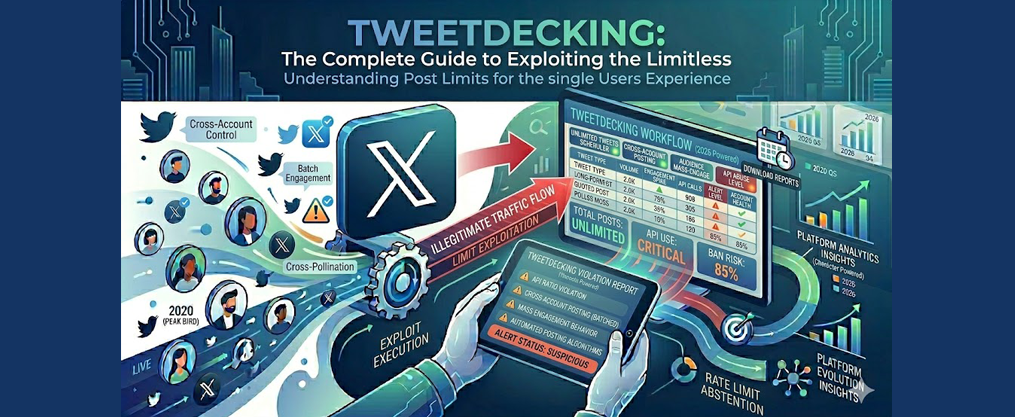
Tweetdecking typically involves accounts with substantial follower counts—often 50,000 to 100,000 followers each—agreeing to retweet specific content on command. The combined reach of these accounts can push a tweet to millions of impressions within minutes, mimicking genuine popularity surges.
It’s important to clarify that tweetdecking is not an official Twitter feature. It’s an abuse pattern built on third-party tools, group direct messages, or external platforms like Discord and Telegram. The practice weaponizes coordination tools that were designed for legitimate social media managers managing multiple twitter accounts.
Unlike organic community sharing where users naturally retweet content they enjoy, tweetdecking involves payment, quotas, and synchronized timing designed to game Twitter’s algorithm. When many tweetdeckers boost the same post within seconds, the platform’s systems can mistake manufactured engagement for genuine interest.
Users who have their accounts suspended for tweetdecking often return with new accounts and continue the practice.

How Tweetdecking Works Behind the Scenes
Behind every artificially viral tweet, there’s often a “deck”—a private network of large accounts that coordinate which tweets to boost and when. These groups operate like shadow advertising networks, complete with admins, membership requirements, and payment structures.
The typical workflow follows a predictable pattern:
- A customer or deck member submits a tweet they want boosted
- Deck admins review and approve the content for alignment with the group’s themes
- Admins issue a timed command via shared channels, often using notifications—such as prompts in Discord or dedicated TweetDeck columns that display real-time alerts for retweets, mentions, likes, and follows—to alert members when to retweet
- Participating accounts retweet or copy the tweet content within precise intervals
Historically, this coordination happened directly inside TweetDeck via shared logins or team access, allowing multiple users to view a unified feed on a single screen and trigger actions simultaneously. After Twitter’s 2018 API updates restricted multi-account mass posting, decks migrated to decentralized tools.
Today, most tweetdecking networks operate through:
- Group direct messages on Twitter itself
- Discord servers with notification prompts
- Telegram channels with automated commands
- Custom browser scripts or extensions
Members are typically required to maintain a minimum follower count to join serious decks. Most networks require anywhere from 20,000 to 100,000 followers per account to ensure credible amplification. Accounts below these thresholds don’t provide enough reach to justify membership.
Some advanced operations incorporate automation scripts to queue retweets, triggering actions within 30-60 seconds of the signal. This rapid coordination evades basic detection while violating Twitter’s automation rules banning repetitive, synchronized behaviors. High-volume automated retweeting, a common practice in tweetdecking, is not permitted according to Twitter’s regulations. Deck members generally make less than admins, but can still earn hundreds of dollars each month just for retweeting tweets onto their account.
Business Models: Selling Retweets and Fake Influence
Many tweetdecking networks operate as underground ad networks with sophisticated pricing structures. They monetize their combined reach by selling retweets and fake influence to anyone willing to pay.
Pricing tiers typically scale based on deck size and total reach:
Deck Size | Per-Tweet Cost | Monthly Subscription | Estimated Reach |
|---|---|---|---|
Small (10-20 accounts) | $5-$15 | N/A | 5,000-20,000 RTs |
Medium (20-50 accounts) | $15-$50 | $100-$500 | 20,000-50,000 RTs |
Elite (50+ accounts) | $50-$200 | $500-$2,000 | 100,000+ impressions |
At peak popularity in 2017-2018, top deck operators reportedly earned $10,000 to $50,000 monthly. Leaked Discord screenshots and confessions on Reddit threads detailed operators netting $30,000 in six months promoting crypto scams and affiliate links. |
Typical customers of these services include:
- Meme aggregators recycling stolen jokes for engagement
- CPA marketers pushing dubious apps or survey offers
- Giveaway farms promising products for email signups
- Nascent influencers buying initial traction to pitch brands
- Low-quality product promotions seeking instant visibility
The inflated metrics serve a specific purpose: they enable sellers to charge premium rates for shoutouts and advertisement placement. An account showing 100,000 retweets on posts can justify charging $1 per 1,000 followers for promotions, versus the organic rate of $0.50, deceiving brands into partnerships based on fabricated virality.

Tweetdecking vs Legitimate Twitter Growth
Not all collaboration on Twitter constitutes tweetdecking. Understanding the difference helps you stay connected to legitimate growth strategies while avoiding practices that could get your main account suspended.
Legitimate influencer marketing involves disclosed partnerships where posts include clear labels like #ad or #sponsored. Engagement comes from real audiences who choose to interact with relevant content. These arrangements typically yield sustainable 2-5% engagement rates from genuine followers, and follow the same best practices you’d use when running structured influencer marketing campaigns on Twitter.
Healthy collaboration practices include:
- Organic retweet exchanges among peers who genuinely support each other’s work
- Community hashtag events like #FollowFriday
- Public “RT for RT” threads without automation or payment
- Co-hosted Twitter Spaces for live audience interaction
- Transparent collaborations with other users in your niche
Tweetdecking crosses the line when it involves:
- Paying for coordinated engagement from networks of accounts
- Mass copying of tweet content across multiple accounts
- Using bots or scripts to game algorithms
- Membership requirements with mandatory retweet quotas
- Undisclosed financial arrangements for boosting specific content
The key distinction is transparency and authenticity. When other users can’t tell that engagement is purchased or manufactured, deception occurs. When you simply click to retweet something you genuinely enjoy, that’s organic behavior.
For social media managers and creators seeking sustainable growth, focus on the kind of authentic, long-term tactics outlined in proven strategies to become popular on Twitter:
- Consistent posting schedules with quality tweet content
- Active reply engagement with your community
- Building niche lists to organize content and engage specific users
- Using X Analytics to identify optimal posting windows
- Creating new columns in TweetDeck offers for monitoring relevant conversations
It’s also essential to have a strategic plan to organize your content, schedule tweets, and plan out tweet threads and outreach efforts in advance. This approach helps maximize engagement and ensures your social media management is both efficient and effective.
Twitter’s Policy Response and Major Crackdowns
Twitter’s rules on spam and platform manipulation evolved significantly around 2017-2018, specifically targeting tweetdecking as a key abuse vector.
The platform’s enforcement intensified in late 2017 through early 2018, triggered by algorithmic detections of “engagement washing.” Twitter’s systems identified clusters of accounts exhibiting:
- Identical retweet timestamps
- Verbatim phrasing across multiple profiles
- Cross-boosting patterns suggesting coordination
- Retweet velocity exceeding organic norms (more than 1,000 RTs/minute from correlated accounts)
A pivotal January 2018 purge suspended over 200 accounts, including high-profile ones like @girlposts (a 500k+ follower meme page), @NoContextHumans, and numerous theme accounts in niches like humor and viral content.
Twitter’s official blog post on February 1, 2018, announced expanded rules specifically targeting:
- Coordinated groups artificially amplifying content
- Services selling or purchasing retweets and likes
- Using multiple accounts to perform identical actions at scale
- Any attempt to artificially inflate engagement metrics
By mid-2018, Twitter reported removing 70 million spam accounts quarterly, with tweetdecking cited in transparency reports as a significant manipulation vector.
Under Elon Musk’s ownership (rebranded as X in 2023), enforcement continues through the “Freedom of Speech, Not Reach” approach. Rather than outright bans for borderline cases, the platform often shadowbans deck participants through reduced visibility, limiting how content appears in other users’ feeds.
Current enforcement includes:
- Removal from search results
- Reduced distribution in the For You timeline
- Account restrictions and verification challenges
- Permanent suspensions for egregious or repeat violations
Risks of Tweetdecking for Accounts and Brands
Chasing fake engagement instead of building real communities creates serious long-term risks that can undermine your entire social media strategy.
Direct account risks include:
Violation Level | Consequence | Impact |
|---|---|---|
First offense | 12-48 hour account locks | Temporary inability to post |
Repeat violations | Search delisting | 70-90% reach reduction |
Systematic abuse | Permanent suspension | Complete account loss |
Network detection | Cross-account takedowns | Multiple accounts banned via device IDs |
During the 2018 enforcement wave, approximately 40% of the top 1,000 humor accounts lost their main profiles to tweetdecking-related suspensions. |
Reputational risks for brands extend beyond platform penalties. When customers discover that viral tweets were manufactured via decks, trust evaporates quickly. A 2019 Vice investigation exposed campaigns from major brands that had been amplified via tweetdecking networks, triggering boycotts and audience churn.
Analytical distortions may be the most insidious risk. Fake engagement misleads A/B testing, causing you to prioritize underperforming content over posts that genuinely resonate with real followers. When botted retweets inflate impressions by 500-1,000% but yield less than 0.1% click-through, your data becomes useless for strategy.
For brands working with agencies or creators, vet partners carefully. Red flags include:
- Promises of guaranteed retweet or follower numbers for fixed fees
- Reluctance to explain growth methods
- Engagement rates that seem disconnected from content quality
- Sudden spikes in metrics without corresponding content changes
Avoid any service or “growth hacker” that promises specific engagement numbers through SMM panels or similar tools. These services almost universally violate platform rules, and are very different from carefully vetting whether it ever makes sense to buy X followers to boost your presence.

How to Spot Tweetdecking and What to Do Instead
Learning to recognize suspicious engagement patterns helps you avoid falling for manufactured virality and protects your own content from exploitation.
Red flags indicating tweetdecking:
- Identical retweet timing from 10+ large accounts within 2 minutes
- The same caption appearing across multiple big profiles verbatim
- Follower-to-engagement mismatches (1M followers but only 500 organic likes)
- Repetitive promotional content like “RT if single” appearing 50+ times
- Giveaway tweets promising expensive items for retweets and follows
Many decked tweets originate from low-credibility pages promoting:
- Giveaways with unrealistic prizes
- CPA offers and survey scams
- Low-quality viral apps
- Cryptocurrency schemes
- Affiliate link promotions
Constructive alternatives to pursue instead:
Building genuine engagement requires patience but delivers sustainable results. Focus on the kinds of system-based tactics used by people who get consistent traction on Twitter:
- Create niche lists to monitor relevant content and engage with tweet authors in your space
- Post consistently using a content calendar to maintain visibility
- Engage authentically by replying to followers and participating in conversations
- Collaborate transparently with creators through disclosed partnerships or co-hosted events
- Use analytics to identify what content resonates and schedule tweets accordingly
TweetDeck’s filtering features can be especially helpful for managing content and conversations more effectively. Users can filter columns in TweetDeck to include or exclude tweets containing specific words or from particular usernames, making it easier to focus on relevant discussions and avoid unwanted content when you set up and use TweetDeck for account management.
If you suspect your content is being copied by tweetdecking accounts without credit, you have options. Compile links and screenshots showing the copied tweets, then report them via Twitter’s copyright or spam tools. The platform reports approximately 70% success rates for legitimate takedown requests, with average 24-hour response times.
For accounts that aren’t outright spam, consider reaching out politely for credit or removal first. However, reserve your right to file formal reports if the behavior continues.
FAQ
Is tweetdecking the same thing as using TweetDeck?
No. TweetDeck (now rebranded as X Pro) is an official Twitter/X dashboard tool for managing accounts that offers powerful features like customizable columns to monitor multiple timelines, schedule tweets, and send direct messages from a single screen. TweetDeck is optimized for desktop and lacks support for mobile applications or other social platforms. X Pro offers multi-account management, allowing users to manage multiple accounts and monitor several accounts without logging in and out. Access to TweetDeck now requires an X Premium subscription. To start using TweetDeck, users must sign in with their Twitter username and password at tweetdeck.twitter.com. You can add a new account within TweetDeck for streamlined management, and also add team members to your accounts, enabling collaboration without sharing passwords. TweetDeck allows users to schedule tweets to be sent at a later time, even if they are not logged in at that moment. Additionally, you can embed tweet collections into your website or blog using TweetDeck’s tweet grid feature and apply broader best practices for creating engaging Twitter post content. It’s a legitimate service now restricted to verified Premium subscribers.
Tweetdecking, by contrast, is an abusive practice where multiple accounts coordinate to fake engagement. The name originated because early practitioners used TweetDeck’s interface to synchronize their actions, but the practice has nothing to do with legitimate use of the tool. Many people now use Discord, Telegram, or group DMs to coordinate tweetdecking without ever touching the TweetDeck app itself.
Can my account be banned just for being in a tweetdecking group?
Yes. Twitter/X can take action against accounts that systematically participate in coordinated spam or paid engagement, even if they are not selling retweets directly. Simply being a member who fulfills retweet quotas puts your twitter account at risk.
To reduce your risk, leave any group that:
- Demands specific retweet quotas from members
- Requires mass copying of tweets
- Involves payment for engagement
- Uses automated scripts to coordinate actions
Even passive membership creates liability. If the network is detected, all participating accounts may face enforcement, including those who simply followed along without managing the operation.
How is tweetdecking different from buying Twitter ads or promoted tweets?
Twitter Ads and promoted tweets are official, transparent advertising products. When you purchase promotion through the platform, your content is clearly labeled as an advertisement, and the entire process follows established policies. Users can see that content is promoted, maintaining transparency, and you can still improve performance by understanding the best time to tweet for higher engagement.
Tweetdecking involves undisclosed, deceptive boosts designed to mislead other users about what is genuinely popular. There’s no display indicating that a tweet was artificially amplified—the goal is specifically to fake organic virality. This deception violates platform rules and can expose both the purchaser and participants to enforcement.
Is it ever safe to pay for engagement on Twitter/X?
Buying likes, follows, or retweets from decks, panels, or “growth” services violates policy and carries significant risk. These services deliver hollow metrics from fake or disengaged accounts that provide no real value.
If you want to pay for reach on Twitter/X, use only:
- Official advertising tools: Twitter/X Ads with clear CPM pricing and transparent delivery
- Disclosed sponsorships: Partnerships with influencers who properly label paid content
Any third-party service promising guaranteed engagement numbers operates in violation of platform rules and puts your account at risk. Instead, focus on legitimate ways to get more likes and retweets on your posts. The limit of what’s acceptable is clearly defined in Twitter’s terms of service.
What should I do if my tweet is being copied by tweetdecking accounts?
Start by gathering evidence. Compile links or screenshots showing the copied tweets, including timestamps that demonstrate your content came first, and consider using structured tweet formats that clearly showcase your original ideas. Log this information before accounts potentially delete evidence.
Then take action:
- Report via official tools: Use Twitter’s copyright or impersonation reporting features, which average 24-hour response times
- File for spam if appropriate: Accounts mass-copying content often qualify as spam under platform rules
- Contact politely first (optional): If the account isn’t outright spam, a direct message requesting credit may resolve the issue
For systematic abuse, prioritize formal reports over polite requests. Deck operators rarely respond to courtesy—they’re running a business model built on content theft. Your blog or original site can also serve as proof of original authorship when filing DMCA takedowns.
Building a real audience takes time, but it protects your account and delivers results that actually matter for your business. Rather than chasing shortcuts that risk your entire presence, invest in consistent content, genuine community engagement, and transparent partnerships. The security of knowing your growth is real—and sustainable—is worth far more than any artificially inflated metric.