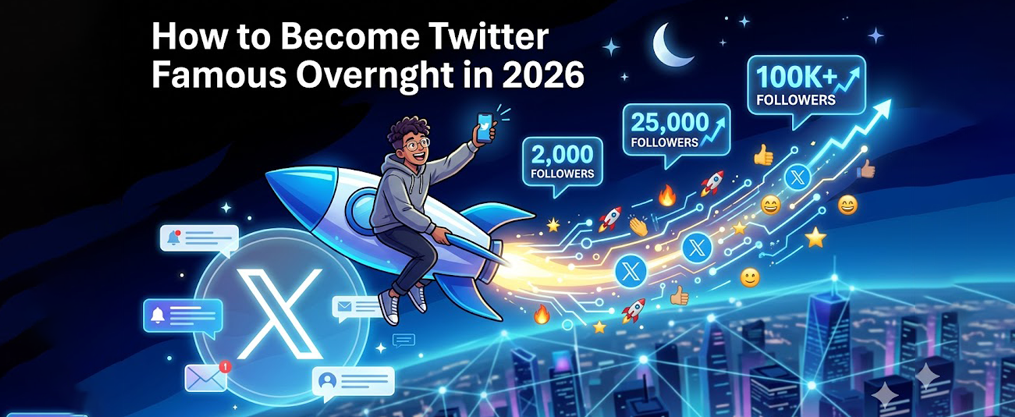
How to Become Twitter Famous Overnight in 2026
This guide is for non-celebrities, indie creators, founders, students, freelancers, and employees who want to become Twitter famous overnight. If you’re looking for actionable strategies to rapidly grow your followers, optimize your profile, create high-impact content, and master engagement tactics, you’re in the right place.
Becoming Twitter famous in 2026 matters more than ever: Twitter fame can open doors to new opportunities, collaborations, and influence in your field. Whether you want to build your personal brand, attract clients, or become a recognized voice in your niche, learning how to become Twitter famous overnight can accelerate your journey.
This comprehensive guide covers strategies for rapid follower growth, profile optimization, content creation, engagement tactics, algorithmic best practices, and more. You’ll learn how to leverage the latest platform features, optimize your timing, and use proven methods to maximize your reach and impact.
Understand What “Famous on Twitter” Really Means in 2026
Old-school celebrity meant TV appearances, magazine covers, and red carpet photos. Twitter fame in 2026 looks completely different: your threads get screenshotted and shared on TikTok, your one-liners become memes on other social media platforms, and people you’ve never met DM you saying they feel like they know you.
X (formerly Twitter) has evolved from a reverse-chronological microblogging platform into an algorithm-driven recommendation engine. The “For You” feed now surfaces content to millions of users who don’t follow you—if your tweets hit the right signals. In this context, the algorithm refers to the automated system that determines which tweets are shown to users based on engagement, relevance, and other factors.
What makes you stand out is not just your content, but how clearly and impactfully your message resonates with your audience, helping you break through the noise and capture attention in the fast-moving feed. Offering a fresh perspective is crucial to differentiate yourself in a crowded platform, while providing genuine insight ensures your content resonates more deeply and builds credibility with your audience.
Here’s what fame benchmarks look like in 2026:
Follower Range | Status | What It Means |
|---|---|---|
5k–25k | Micro-influence | You’re known in a small circle, getting DMs from peers |
25k–100k | Niche famous | Brands notice you, speaking invites start arriving |
100k–250k | Platform known | Your takes get quoted by media, you’re a “name” |
250k+ | Twitter famous | You’re recognized across niches, major leverage |
But here’s what most people get wrong: fame is more about recurring reach than a single 1M-view banger tweet. One viral moment doesn’t make you famous—consistent visibility does.
Key Metrics to Watch
- Followers (growth rate matters more than total count early on)
- Average impressions per tweet (aim for 5–10x your follower count)
- Engagement rate (2–5% is solid for most niches; engagement rate is the percentage of people who interact with your tweet out of those who see it)
- Profile clicks (people checking you out means curiosity)
- Link clicks and bookmarks (signals of real value)
This guide is geared toward non-celebrities: indie creators, founders, students, freelancers, and employees wondering how to become known voices in their fields. If you’re starting from zero or stuck at a few hundred followers, this is your playbook—including advice on the best time to tweet for higher engagement and a step-by-step guide to getting Twitter followers from 0.
With a clear understanding of what Twitter fame means, the next step is to choose your niche and persona to stand out.
Choose a Niche and Persona: Decide Why Anyone Should Follow You
Random “variety show” accounts rarely become famous. Scroll through accounts with more followers than you can count on both hands, and you’ll notice a pattern: almost all of them are famous for 1–2 core topics.
The algorithm on X uses what insiders call “sim clusters”—groupings of users and content based on similar interests and behaviors. When your content is clearly about a focused set of topics, the algorithm knows exactly which audience to test it with. To boost your visibility and relevance, make sure to engage with specific accounts within your niche—such as influential creators, potential clients, or industry peers—rather than random users, and use a targeted strategy to find the right Twitter followers. Mixing unrelated niches (startup tips, family photos, anime memes) confuses the system and your audience.
As you choose your niche, it’s also valuable to follow and engage with interesting accounts in your space. These are profiles that consistently share relevant, high-quality content and are likely to reciprocate engagement, helping you build relationships and attract reciprocal follows.
Specific Niche Examples That Work in 2026
- AI builders documenting tool creation and prompt engineering
- Bootstrapped SaaS founders sharing transparent revenue updates
- Gen Z personal finance breaking down investing in plain language
- Premier League tactics analysts breaking down match footage
- K-pop edits and fan community content
Positioning Exercise
Pick 1 main niche and 2 supporting themes. For example:
- Main: Solo-founder journey
- Supporting: Productivity hacks, transparent revenue updates
This gives you enough variety to stay interested while maintaining focus. Supporting themes also help you stay relevant by aligning your content with trending topics and audience interests.
Choose Your Persona Type
Persona | Description | Example |
|---|---|---|
The Expert | Deep knowledge, teaches others | “I’ve built 3 profitable SaaS apps, here’s what works” |
The Learner | Documents the journey in real time | “Day 47 of learning to code—here’s what I built” |
The Entertainer | Memes, humor, cultural commentary | “Breaking down why that movie trailer flopped” |
The Curator | Best links + smart commentary | “5 AI tools I tested this week, ranked” |
Sample positioning lines to adapt:
- “I help developers go from 0 → $10k MRR”
- “I explain US politics like you’re texting a friend”
- “I post the startup lessons they don’t teach in business school”
Once you’ve chosen your niche and persona, it’s time to make your profile irresistible to new followers.
Build a Profile That Looks Famous Before You Are
Optimizing your Twitter profile is one of the most powerful ways to increase your follower conversion rate—by 200-400%. Profiles that are complete and visually appealing are more likely to attract followers, as first impressions count significantly on Twitter. A clear and compelling bio can significantly impact whether users choose to follow you, as it communicates your value proposition in 160 characters or less. Accounts with face photos receive 47% more followers than accounts with logos, illustrations, or no photos.
People judge your Twitter account in about 3 seconds based on your avatar, banner, name, and bio. Optimizing your profile includes having a clear bio, a professional photo, and a pinned tweet that showcases your best work. Fame begins with a profile that feels “bigger than your current numbers,” and many of the same principles apply when becoming popular on Twitter using proven strategies.
Think of your profile as a landing page. Every element should answer one question: “Why should I follow this person?” Your first tweet, especially if it’s pinned, acts as a critical hook—like a billboard or storefront window—that captures attention and encourages users to engage further. Including a clear call to action in your bio or pinned tweet—such as inviting visitors to follow, click a link, or check out your latest project—can significantly increase engagement and help guide visitors toward the next step.
In your profile links, you can direct users to a full article for more in-depth information about your expertise or story, providing additional value and establishing credibility.
Handle and Name
Pick a handle close to your real name or brand name:
- Good: @alexwrites, @devbylena, @saikiranfinance
- Avoid: @alex_writes_2024_xyz, @randomuser8847
If your ideal handle is taken, add a short, relevant modifier (your niche, location, or a single word).
Profile Photo
In 2026, the winning profile photo formula is:
- High-resolution (no pixelation)
- Face clearly visible (accounts with face photos receive 47% more followers)
- Bright or contrasting background
- Consistent with your LinkedIn, Instagram, and other platforms if building a personal brand
Anonymous accounts can work, but you’ll need a distinctive avatar (mascot, illustrated character, or striking logo) to compensate.
Banner
Your banner is prime real estate. Options that work:
- Social proof: Logos of publications you’ve been featured in, companies you’ve worked with
- Your niche in big text: “Building in public | $0 → $100k MRR journey”
- Clean background with tagline and URL
Bio
Your bio should answer: Who are you? Who do you help? What will they see here?
Formula: [Identity] + [What you do/share] + [Who benefits] + [Optional: proof/numbers]
Examples:
- “Founder @companyname | Sharing the real numbers behind bootstrapping | 50k subscribers”
- “Former Goldman analyst | Breaking down markets for normal people | Your finance friend”
- “Building AI tools in public | Helping devs ship faster | $42k MRR”
Keep it under 160 characters. One emoji is fine; emoji spam looks amateur.
Link Strategy
Your profile link should go to:
- A newsletter signup page
- Your product or portfolio
- Your blog (where you can embed tweets and drive cross-platform engagement; embedding tweets in blog posts can increase your reach and engagement. Share your latest blog post on Twitter and test different headlines or images to maximize engagement and drive more traffic.)
- A Linktree-style page if you have multiple CTAs
Alternatively, pin a tweet thread that introduces you and your best work if your main CTA is simply “follow me.”
Follower-to-Following Ratio
This matters more than most people realize. Following 5,000 accounts while having 500 followers looks like spammy behavior. Aim for a ratio under 1.5:1 (followers to following). Don’t follow people randomly hoping for follow-backs—it signals desperation and can hurt your algorithmic treatment.

With your profile optimized, the next step is to master your posting strategy for maximum visibility.
Post Like a Pro: Volume, Formats, and Hooks
Consistent posting and engagement are the foundation of rapid follower growth. The first 30 minutes after posting a tweet are critical for determining its visibility; strong engagement during this time can push the tweet to a wider audience. The algorithm prioritizes engagement in the first 15–30 minutes to boost visibility, so it’s essential to post when your audience is most active and encourage early interactions.
Posting Volume
Stage | Tweets per Day | Notes |
|---|---|---|
Beginner (0–2k) | 2–4 | Focus on finding your voice |
Growth (2k–20k) | 5–10 | Mix formats, test hooks |
Advanced (20k+) | 5–15 | Threads, replies, short posts combined |
- Posting 3–5 times daily helps maintain visibility in followers’ feeds.
- Consistency in posting is crucial; posting 1-2 high-quality tweets daily consistently is more effective than posting 10 mediocre tweets randomly.
- Quality matters more than raw volume, but volume creates surface area for discovery. You can’t optimize what doesn’t exist.
Types of Tweets
Solo Tweets (One-liners)
Short, punchy observations that can stand alone. However, single tweets generally have less impact and engagement compared to threads, which often generate more impressions, retweets, and followers.
“The best marketing is a product people talk about without being asked.”
Banger Tweets
Controversial or counterintuitive takes that spark debate. Creators can achieve virality by using contrarian opinions or engaging hooks that provoke responses.
“Most productivity advice is written by people who’ve never had a real job.”
Threads
Threads are a series of connected tweets that tell a story or break down a topic in depth. Threads on Twitter can generate 3x more engagement than single tweets because they increase dwell time, keeping users reading longer. Dwell time refers to how long someone spends engaging with your post. Twitter threads can generate thousands of impressions and hundreds of retweets, making them the highest-leverage content format for follower growth.
“The difference between a $50k and $500k freelancer isn’t skill. It’s positioning.”
Quote Tweets
Add your perspective to other people’s tweets and actively engage with people’s tweets to foster interactions and build community. Engage with popular tweets, especially those tied to trending topics, to increase your visibility and reach new audiences. This puts you in front of their audience and helps you build relationships.
Images and Videos
- Visual content including images, infographics, and graphics generates 150-200% more engagement than text-only posts on Twitter.
- Posts with native images or video receive significantly more engagement than text-only posts.
- Tweets featuring native video uploaded directly to the platform receive about 10 times more engagement than text-only posts.
Post visual content to stand out in crowded feeds. Annotated screenshots, charts, and short clips dramatically improve stop-scroll rates.
Retweets
Retweets are also a key part of your content mix. Encourage retweets by creating shareable content, as retweets help increase your content’s visibility and amplify your reach.
Hook Templates That Work in 2026
Using a clear and engaging hook in the first line of a tweet is essential to capture attention and encourage users to read further. Here are hooks tailored to current topics:
- “You’re using ChatGPT wrong. Here’s the prompt that changed everything:”
- “Here’s how I went from 0 to 10k followers in 4 months:”
- “Steal this exact template I use for [specific outcome]:”
- “Everyone says [common advice]. It’s wrong. Here’s why:”
- “The hidden feature in [tool] that nobody talks about:”
Batch Your Content
Schedule posts to save time. Spend 1–2 hours per week drafting 20–40 tweet ideas in a notes app, Notion, or a tool like Typefully. Refine the best ones throughout the week.
Use a content calendar to plan themes: Monday = thread, Tuesday = hot take, Wednesday = curated links, etc.
Think in Screenshots
Tweet with “screenshot potential” in mind. Your posts can be repurposed on TikTok, Instagram, LinkedIn, and other platforms. Clean, quotable tweets with white backgrounds and clear text perform well when reshared.
Use Visuals, Threads, and Storytelling to Stand Out
In 2026, the feed is crowded. Images, carousels, and short clips dramatically improve your chances of getting noticed and reshared.
Visual Types That Work
- Annotated screenshots (app interfaces, code snippets, before/after)
- Charts and graphs showing growth or trends
- Short Loom-style clips walking through a process
- Meme templates relevant to your niche
- Phone camera selfies at events (authenticity wins)
Thread Structure (6–10 tweets)
- Hook (controversial claim or big promise)
- Context (why this matters, your credibility)
- Conflict/mistakes (what went wrong, lessons learned)
- Key lesson (the insight)
- Concrete steps (actionable breakdown)
- Soft CTA (“Follow for more,” “Bookmark this”)
Focus on value-first content—prioritize collaborative, informative, and mutually beneficial posts to build trust and authority with your audience, drawing inspiration from examples of highly engaging tweets that boost interaction.
Use Date-Stamped Stories
“In January 2023 I had 212 followers. By October 2024 I hit 50k. Here’s the playbook I followed.”
Personal narratives outperform generic advice. Every thread should deliver a clear payoff—a tutorial, checklist, or cautionary tale—not random journaling.
Now that you know how to create engaging content, let’s look at how timing and analytics can further boost your reach.
Master Timing, Analytics, and the Algorithm
Fame isn’t only about what you post. When and how consistently you show up in timelines matters just as much. Paying attention to engagement metrics and algorithmic signals is crucial—monitoring things like profile clicks, dwell time, and early engagement helps you optimize your posting strategy for maximum reach and aligns with proven methods for getting traction on Twitter.
In the context of Twitter/X, the algorithm is the automated system that determines which tweets are shown to users based on engagement, relevance, and other factors.
Many people miss important signals that can make or break their growth, such as the impact of authentic engagement or understanding how the algorithm prioritizes content. By staying alert to these often-overlooked details, you can adjust your approach and increase your chances of becoming Twitter famous overnight.
Timing Your Posts
- The best times to post on Twitter are weekdays between 9am-11am and 6pm-8pm in your target audience’s timezone.
- Posting during peak hours can increase engagement by 5-10 times compared to posting during low-traffic periods.
- Engagement rates can drop by 30-50% on weekends for professional and business-focused audiences compared to weekdays.
Test different slots for two weeks, then check your Twitter analytics to see which times generate the most impressions and engagement.
Using X’s Built-In Analytics
Check your analytics weekly. Focus on:
- Top tweets (what got the most impressions?)
- Engagement rate per tweet
- Profile visits (are people clicking through?)
- Link clicks (if you’re driving traffic somewhere)
Tracking your top-performing tweets weekly can reveal patterns in content, format, timing, and topics that drive follower growth. Using Twitter analytics to identify when your specific followers are most active can help maximize the visibility of your content.
Test Variables One at a Time
A/B testing different approaches systematically, such as posting times and content formats, can reveal what actually drives results versus assumptions. Don’t change everything at once. Test:
Variable | Test Method |
|---|---|
Hooks | Same content, different opening lines |
Length | Short tweet vs. thread on same topic |
Images | Text-only vs. with visual |
Timing | Morning vs. evening |
Format | Statement vs. question |
Keep a simple tracking spreadsheet to log what you tested and the results.
Algorithm Signals
The X algorithm in 2026 rewards:
- Consistent posting (daily presence beats sporadic bursts)
- Quick early engagement (comments and likes in first 30 minutes)
- Dwell time (threads and long reads keep users on-platform; dwell time refers to how long someone spends engaging with your post)
- Profile clicks (24x more powerful than likes as a quality signal)
- Bookmarks (signals that content is worth saving)
- Replies and quote tweets (real conversation, not just passive likes)
All this helps drive growth and engagement by signaling to the algorithm that your content is valuable and worth promoting.
Negative signals include: being reported, muted, or blocked by many users. Avoid spammy behavior that triggers these actions.
Repost Top Performers
Many of your new followers never saw your best old tweets. After 2–4 weeks, repost top performers at a different time with small revisions. One creator reported getting double the engagement on a reposted video after their audience had grown.

With your timing and analytics dialed in, it’s time to supercharge your growth through engagement.
Engage Aggressively (Without Being Annoying)
Engaging with larger accounts in your niche through thoughtful replies is often faster for growth than relying solely on your own posts. Building rapport with other Twitter users is essential before starting conversations, as it helps establish familiarity and trust. Engaging with other people’s tweets—by retweeting, commenting, and adding your perspective—not only increases your reach but also helps build relationships and foster a sense of community.
Engagement is not optional—it’s half the game. Tagging friends and engaging with people’s tweets by replying, retweeting, and commenting can help foster community and increase your visibility. Actively participating in Twitter Chats and Spaces to share insights and demonstrate your expertise further builds rapport and authority. These strategic interactions and collaborations also connect you with potential followers, expanding your audience and deepening engagement, and are core to effective strategies for increasing followers on Twitter. Actively interacting with your audience through replies and retweets can foster a stronger community and increase follower retention.
Daily Engagement Steps
Set aside 15–30 minutes daily for engagement:
- Reply to 3–5 posts from top accounts in your niche
- Quote tweet 1–2 smart takes with your perspective
- Answer questions under trending topics in your area
- Respond to every comment on your own posts
- Engage with other people’s tweets by liking, replying, or retweeting to build relationships and increase your visibility
Engaging with influencers can significantly increase your visibility and follower acquisition velocity by systematically interacting with accounts that have larger audiences than yours. Engaging with influencers and established accounts by providing valuable responses to their questions can lead to massive exposure and new followers. Engaging with influencers can help tap into their audiences and build a larger following. Building relationships with influencers can lead to collaborations that expose you to their audience, significantly increasing your follower count.
This compounds. Other users start recognizing your handle. People click through to your profile. Followers follow.
Reply Strategies
“Nice!”, “So true!”, or simply commenting “great post” accomplish nothing. Write replies that:
- Add a new insight or data point
- Politely disagree with reasoning
- Expand with a concrete example
- Ask a follow-up question that sparks discussion
A well-crafted reply under a viral tweet can generate thousands of profile visits.
Build Twitter Lists
Create targeted lists to monitor daily:
- “Top 50 indie hackers”
- “Journalists covering my niche”
- “VCs in my space”
- “Peers at my follower level”
Check these lists each day for reply opportunities instead of scrolling the main feed aimlessly.
Start Conversations
Don’t just react—initiate. Post:
- Questions asking for stories (“What’s your biggest lesson from failing?”)
- Mini-polls on niche topics
- “This or that” questions that invite debate
- Threads asking for recommendations or resources
Engaging with trending topics and hashtags can significantly increase your visibility and follower acquisition velocity, as these topics receive extraordinary visibility through Twitter’s trending section. Monitoring trending topics daily and identifying trends relevant to your niche can help you contribute genuine insight, humor, or value that aligns with your brand and expertise. Adding trending hashtags to your tweets can help guide users to your content, as clicking or searching for a specific hashtag presents a collection of tweets associated with that term. Using trending hashtags strategically in relevant tweets can increase discoverability, helping users searching that trend discover your contribution. When you create content genuinely related to a trending hashtag, including it helps users searching that trend discover your contribution, but avoid spamming unrelated hashtags. Participating in trending conversations can expose your content to massive audiences beyond your followers, generating thousands of impressions and dozens of new followers from single tweets.
These invite replies and quote tweets, boosting your engagement metrics.
Avoid Low-Value Engagement
What hurts credibility:
- Mass-tagging random people
- Copy-paste replies across multiple posts
- Replying just to drop links to your stuff, instead of learning how to promote events on Twitter
- Generic comments on every viral tweet
- Engaging with or accumulating inactive accounts, as these followers do not interact with your content and can diminish your reach and algorithmic trust
This looks desperate and can get you muted or reported.
Use Twitter Chats, Spaces, and Events
A Twitter chat is a scheduled conversation around a hashtag where participants answer questions and discuss topics in real time. X Spaces are live audio rooms where you can speak directly to an audience.
Both still matter for fast exposure in a niche. Participating in Twitter Spaces and industry conversations can position you as an active community member, making users more inclined to follow you.
How to use them:
- Find 2–3 recurring chats or Spaces in your domain (search hashtags like #SEOchat, #StartupTwitter, or browse Spaces in your topic area)
- Show up consistently for a few months
- Arrive early to Spaces, raise your hand, and speak with concise points
- Follow and DM interesting participants afterward
Live tweet major events:
When WWDC, CES, major sports finals, or industry conferences happen, tweet along using official hashtags. Incorporate trending hashtags to join active conversations and boost your visibility. Tag speakers and brands. Engaging with pop culture trends during these events can help you reach a broader audience and ride real-time waves of attention, connecting with community members interested in the same thing.
With engagement strategies in place, you can now leverage collaborations and cross-promotion to accelerate your growth.
Leverage Collaborations, Gatekeepers, and Cross-Promotion
Big accounts rarely grow alone. They collaborate with peers, niche media accounts, and “gatekeepers” who reshare their content. Getting engagement from bigger accounts can amplify your content’s reach and accelerate your growth, as the algorithm often boosts posts that receive attention from established profiles. Leveraging your existing audience on Facebook by cross-promoting your Twitter profile—through invites, competitions, or giveaways—can also drive traffic and boost your Twitter followers. Integrating Facebook as part of your broader social media strategy increases overall engagement and sets the stage for greater success, especially when you understand Twitter’s user growth, platform changes, and engagement trends.
Identify Gatekeepers
Gatekeepers are accounts or people with outsized influence in your niche. Examples:
- Curated accounts that aggregate content (like accounts that share the best threads in a topic)
- Newsletter writers who regularly quote tweets in their editions
- Community hubs and group accounts
- Podcast hosts who screenshot interesting takes
Getting on their radar means massive reach you couldn’t earn alone.
Tactics for Getting Noticed
Don’t DM gatekeepers asking “please retweet my stuff.” That’s self promotion that gets ignored.
Instead:
- Leave thoughtful replies on their posts for weeks
- Share their work with genuine commentary
- DM with value first (a resource, an introduction, feedback on their work)
- Tag them when you create something genuinely relevant to their audience
Build the relationship before asking for anything.
Peer Collaborations
Find 3–5 accounts at your level (similar follower count, same niche) and support each other:
- Co-write threads where you each contribute sections
- Do Q&A quote-tweet chains
- Engage on each other’s posts quickly after publishing (real engagement, not robotic likes)
Strategic collaborations with accounts at similar growth stages can expose you to new audiences, increasing your chances of gaining followers. These “reply squads” work when they’re genuine. They fail when they’re obvious engagement pods with hollow interactions.
Cross-Promotion on Other Platforms
Promote your Twitter on other social media platforms:
- Instagram Stories with swipe-ups to your tweets
- LinkedIn posts embedding your best tweet
- YouTube video descriptions linking to your profile
- Email newsletter footers with a follow CTA
- TikTok videos discussing your thread topics
Once you hit 2k–5k real followers, you can negotiate shoutout swaps with accounts of similar size and niche. “I’ll share your thread to my audience if you share mine.”
Should You Use Growth Hacks and Promotion Services?
Let’s talk honestly: many accounts quietly use tools to schedule posts, manage DMs, and analyze performance. That’s fine.
What’s not fine:
- Buying fake followers
- Low-quality engagement pods where everyone likes without reading
- Automated follow/unfollow schemes
- Bots that reply to hundreds of accounts with template messages
Instead, focus on an effective Twitter promotion strategy that weighs the pros and cons of buying Twitter followers versus using tools for free, organic follower growth.
Risks include: low engagement rate (outing you as fake), reduced algorithmic trust, and possible account penalties.
Ethical amplification options:
- Limited paid ads on your best-performing tweets
- Newsletter ad slots in relevant publications
- Sponsored shoutouts from creators whose audiences fit yours
Rule of thumb: If you’d be embarrassed to show screenshots of your “growth tactic” publicly, don’t use it.
With collaborations and cross-promotion in play, it’s time to convert your attention into real opportunities.
Convert Attention into a Real Audience and Opportunities
Fame is fragile if you don’t funnel impressions into durable assets. Followers alone don’t pay bills—email lists, products, and off-platform communities do.
Set Up a Simple Funnel
Profile link → Landing page (newsletter, lead magnet, product waitlist) → Consistent follow-up
Your landing page should:
- Load fast
- Have a clear headline explaining what they get
- Ask for just an email (minimize friction)
- Deliver real value in your first few emails
Monetization Options
Opportunity | When It Starts | Notes |
|---|---|---|
Consulting/coaching | 2k–5k followers | If your audience is targeted |
Freelance leads | 2k–10k | Especially in tech, design, writing |
Digital products | 5k+ | Courses, templates, guides |
Sponsorships | 20k–50k+ | Brands want engaged, niche audiences |
Speaking | 10k+ | Conferences find you through tweets |
Job opportunities | Any size | Hiring managers scout Twitter daily |
Pin a High-Converting Tweet
Your pinned tweet is the first thing profile visitors see after your bio. Make it count:
- Introduce who you are and what you do
- Showcase your best work or results
- Include a clear CTA (“Follow for daily [topic]” or “Join 5,000+ readers at [link]”)
Update your pinned tweet quarterly as your work evolves.
Track Conversion Metrics
Fame without conversion is just vanity. Track:
- Profile visits to follows (are visitors converting?)
- Link clicks to signups (is your landing page working?)
- DM volume for collaborations (are opportunities arriving?)
- Revenue or leads generated from Twitter presence
If the numbers don’t move, adjust your profile, CTA, or content strategy.

With your conversion funnel in place, it’s important to stay consistent and avoid burnout as you chase Twitter fame.
Stay Sane and Consistent While Chasing Twitter Fame
The chase for likes and more Twitter followers can become addictive and discouraging. Fame is a long game, not a weekend challenge.
Create a Weekly Schedule
Block specific times for Twitter activities:
Day | Activity |
|---|---|
Monday | Draft week’s content (1 hour) |
Tuesday–Friday | Post, schedule posts, 15-min engagement blocks |
Saturday | Analyze top tweets, plan next week |
Sunday | Longer thread or rest day |
Twitter shouldn’t consume every free moment. Boundaries matter.
Set Process Goals
Obsessing over daily follower counts leads to burnout. Focus on engagement instead—like improving your retweet rate. Here are 10 proven methods to generate more retweets to help you grow your Twitter presence more effectively.
- 30 quality tweets per week
- 10 useful replies per day
- 1 thread per week
- 3 meaningful conversations with peers
The followers follow the process.
Dealing with Hate and Negativity
As you grow, criticism arrives. Some is valid; much is noise. Guidelines:
- Mute liberally, block without guilt
- Don’t quote-tweet trolls to “own” them (you amplify them)
- Avoid flame wars—you rarely change minds and always waste time
- Take valid criticism, ignore bad-faith attacks
Your peace of mind is worth more than a clever comeback.
Take Intentional Breaks
- 24–48 hours off every few weeks
- No-phone mornings
- Time-limited daily app usage (set a timer)
For creators looking to avoid burnout and simplify content creation, consider exploring tweet formats that transform your ideas into posts and leveraging organic Twitter growth tools and services to automate routine tasks while still growing a genuine audience.
Burnout is real. The platform will still be there when you return.
Reframe Fame
Fame on Twitter is a by-product of making useful or entertaining things for a specific group of people over months and years. It’s not the goal—it’s the side effect of showing up, adding value, and connecting with community members who share your interests.
Focus on helping readers, building in public, and engaging with genuine curiosity. The numbers follow.

Frequently Asked Questions
How long does it realistically take to get famous on Twitter if I’m starting from zero?
With consistent effort—multiple tweets per day, daily engagement, and clear positioning—most non-celebrities need 6–18 months to become “known” in a niche (10k–50k followers). Building a legitimate engaged audience of 10,000 followers purely through organic methods typically takes 12-24 months, but combining strategic organic tactics with smart growth investments can compress this timeline to 3-6 months. Crossing 100k+ typically requires 2–3 years of serious work unless you have unusual advantages like existing fame on other platforms or a massively viral moment that you capitalize on immediately.
Is it possible to get famous on Twitter without showing my face?
Yes. Anonymous or pseudonymous accounts can become big, especially in crypto, finance, memes, or software niches. However, they must compensate with extra-strong content, a consistent voice, and often distinctive visual branding like a mascot avatar. Building trust without a face takes longer, but many of the platform’s most influential accounts have never revealed their identity.
Do I need to buy Twitter Blue to grow faster?
While paid verification can sometimes improve visibility (priority in replies, edit button, longer posts), it’s not a magic growth lever. Great content and relentless engagement matter far more than having a checkmark. That said, if you’re serious about growth and can afford it, the small algorithmic advantages may be worth it—especially for appearing higher in reply sections under major accounts.
How many followers do I need before brands or clients start reaching out?
Outreach can start as early as 2k–5k followers if your audience is targeted and engaged. Freelancers in tech, writing, and design regularly get leads under 5k. Sponsorship deals and serious brand work commonly start around 20k–50k+ in a focused niche. Engagement rate and audience quality matter more than raw follower counts—1,000 engaged followers in a valuable niche beat 50,000 disengaged ones.
Can I become Twitter-famous by being active only on weekends?
Weekend-only activity dramatically slows growth. The algorithm favors consistent presence, and your engagement with other users builds compounding relationships over daily interactions. If weekends are all you have, schedule posts throughout the week and commit to at least 10–15 minutes of daily replies. But understand that your timeline to fame will be significantly longer than someone showing up daily.
Essential Twitter Tools and Resources for 2026
Maximizing your Twitter presence in 2026 means leveraging the right tools and resources to streamline your workflow, analyze your performance, and connect with your target audience. Whether you’re a creator, entrepreneur, or social media manager, having the right toolkit can make all the difference in growing your follower count and building a standout personal brand.
Start with Twitter Analytics, the platform’s built-in dashboard that gives you a clear view of your tweet performance, engagement rates, and audience demographics. Use these insights to refine your content strategy, identify what resonates with your followers, and track your progress toward Twitter fame.
For those looking to reach a wider audience, Twitter Ads offers powerful targeting options to promote your best tweets and attract new followers. But organic growth is just as important—third-party tools like Hootsuite, Buffer, and TweetFull can help you schedule tweets, manage multiple Twitter accounts, and automate routine tasks, freeing up more time for genuine engagement.
Don’t overlook community-driven resources like Twitter Chats and Twitter Spaces. These features allow you to participate in real-time conversations, share your expertise, and connect with your target audience on a deeper level. Regularly joining or hosting Twitter Chats can position you as an industry leader, while participating in Spaces gives your personal brand a voice—literally.
By combining Twitter’s native features with smart third-party tools, you’ll be equipped to optimize every aspect of your Twitter account, boost your follower count, and make your mark in the ever-evolving world of social media.
Twitter Security and Safety: Protecting Your Account and Reputation
In the fast-paced world of Twitter, protecting your account and reputation is non-negotiable. A compromised Twitter account can undo months—or years—of hard work building your follower count and Twitter presence. That’s why prioritizing security and safety is essential for anyone serious about Twitter growth.
Start by using a strong, unique password for your Twitter account and enable two-factor authentication to add an extra layer of protection. Be vigilant about suspicious links or attachments, especially from unknown sources, as these can be gateways for hackers or phishing attempts.
Fake accounts and spam tweets are still rampant in 2026. If you spot suspicious activity, report it to Twitter immediately to help maintain a healthy environment for all users. Regularly review your followers and block or mute any accounts that seem inauthentic or disruptive to your community.
Remember, your reputation is just as important as your follower count. Avoid engaging with trolls or participating in flame wars that can damage your credibility. By taking these proactive steps, you’ll safeguard your Twitter account, protect your personal brand, and ensure your focus stays on growing your audience and making a positive impact.
Twitter Etiquette and Best Practices for Modern Creators
Building a strong Twitter presence and achieving Twitter fame isn’t just about what you post—it’s also about how you interact. Modern creators who want to attract more followers and grow their follower count need to master Twitter etiquette and best practices.
Start with the basics: be respectful and considerate in your tweets, use proper grammar and spelling, and steer clear of unnecessarily controversial or sensitive topics that could alienate your target audience. Consistency matters, but so does quality—avoid spamming your followers with too many posts or the same tweet repeatedly. Instead, focus on sharing valuable, engaging content that sparks conversation and delivers real insight.
Engage genuinely with your audience by responding to comments, answering DMs, and acknowledging feedback. Use Twitter Analytics to monitor which tweets get the most engagement and adjust your strategy to better serve your followers’ interests. Remember, building a loyal community is about more than just numbers—it’s about creating a personal connection and offering value first.
By following these best practices, you’ll not only increase your follower count but also establish a reputation as a thoughtful, trustworthy creator—setting the stage for long-term Twitter fame.
Staying Up-to-Date with Twitter Trends and Features
Twitter is constantly evolving, and staying ahead of the curve is key to maintaining a strong Twitter presence and attracting more followers. To keep your content fresh and relevant, make it a habit to follow industry leaders, monitor trending topics, and participate in Twitter Chats and Spaces that align with your niche.
Experiment with new content formats like Twitter threads, which allow you to share deeper insights and stories, and live audio rooms, where you can connect with your target audience in real time. Pay attention to how the Twitter algorithm is shifting—what worked last year might not work today. Use these insights to refine your strategy and ensure your tweets are always reaching the right people.
By staying current with the latest Twitter features and trends, you’ll be able to create content that stands out, engage with your community in new ways, and consistently grow your follower count. The most successful Twitter users are those who adapt quickly and aren’t afraid to try something new.
Avoiding Common Mistakes That Derail Twitter Growth
Even the most ambitious Twitter users can fall into traps that stall their growth. To build a thriving Twitter presence and achieve Twitter fame, it’s crucial to avoid common mistakes that can undermine your efforts.
First, never buy fake followers—while it might boost your follower count temporarily, it destroys your credibility and can trigger penalties from Twitter’s algorithm. Focus on attracting real, engaged followers by sharing valuable content tailored to your target audience.
Avoid posting low-quality or irrelevant content, as this can lead to a drop in engagement and even cause followers to unfollow. Over-promoting yourself or your products can also turn people off; instead, prioritize sharing insights, tips, and stories that provide genuine value.
Finally, be mindful of your Twitter etiquette and steer clear of divisive or sensitive topics that could alienate your audience. By focusing on authentic engagement and consistently delivering high-quality content, you’ll set yourself up for organic growth, more followers, and lasting Twitter fame.